
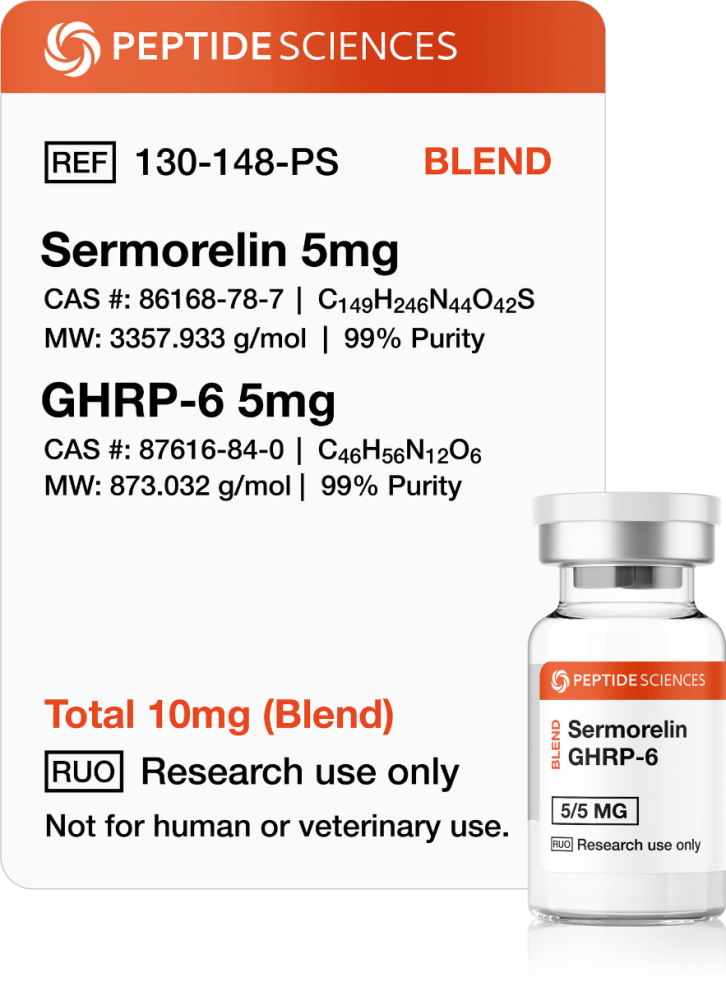
Sermorelin, GHRP-6, GHRP-2 9mg (Blend)
$95.00
Sermorelin, GHRP-6, and GHRP-2 is a research peptide blend combining three distinct growth hormone secretagogues that act synergistically on the hypothalamic–pituitary axis. Sermorelin (GHRH 1–29) stimulates GHRH receptor–mediated cAMP/PKA signaling, while GHRP-6 and GHRP-2 activate the ghrelin receptor (GHS-R1a) through Gq/11 and calcium-dependent pathways. This blend is utilized in endocrine and receptor biology research to study coordinated GH release, peptide–receptor crosstalk, and pulsatile secretion mechanisms.
For research use only. Not for human consumption.
References:
Bowers CY et al., Endocrinology, 1990 126(2):1165–1171
Frohman LA et al., Front Neuroendocrinol, 2002 23(3):257–291
Kojima M et al., Nature, 1999 402(6762):656–660
Sermorelin, GHRP-6, GHRP-2 9mg (Blend) – Buy High-Quality Sermorelin, GHRP-6, GHRP-2 9mg (Blend) Online
Looking to buy Sermorelin, GHRP-6, GHRP-2 9mg (Blend) for your research laboratory? You have come to the right place.
We currently have Sermorelin, GHRP-6, GHRP-2 9mg (Blend) for sale and it is in stock and ready for immediate shipping.
Our Sermorelin, GHRP-6, GHRP-2 9mg (Blend) is of the highest purity, making it the best Sermorelin, GHRP-6, GHRP-2 9mg (Blend) online for scientific studies.
Product Overview
Sermorelin, GHRP-6, GHRP-2 9mg (Blend) is a premium research compound widely utilized in various scientific studies.
Researchers seeking to buy Sermorelin, GHRP-6, GHRP-2 9mg (Blend) online often prioritize purity and consistency.
This compound has been studied extensively for its unique biochemical properties and its role in cellular pathways.
Sermorelin, GHRP-6, GHRP-2 Blend: Overview
The Sermorelin, GHRP-6, and GHRP-2 peptide grouping is a research-use-only formulation designed for the investigation of coordinated signaling within the somatotropic and ghrelin axes. This formulation combines a growth hormone–releasing hormone (GHRH) analogue with two growth hormone secretagogue receptor (GHS-R1a) agonists to enable mechanistic study of receptor convergence, intracellular signaling integration, and neuroendocrine regulation in preclinical experimental systems.
Each peptide in this formulation engages distinct but complementary receptor systems. When evaluated together in laboratory models, they provide a controlled framework for studying non-redundant receptor activation, signal amplification, and feedback modulation without implying translational or clinical application.
Sermorelin, GHRP-6, GHRP-2 Blend: Biochemical Characteristics
Sermorelin is a synthetic peptide corresponding to the biologically active N-terminal fragment of endogenous growth hormone–releasing hormone (GHRH). It selectively binds the GHRH receptor (GHRH-R), a class B G protein–coupled receptor that primarily activates adenylate cyclase, increases intracellular cyclic AMP (cAMP), and initiates protein kinase A (PKA)-dependent transcriptional signaling in pituitary-derived cellular models.
GHRP-2 and GHRP-6 are synthetic hexapeptides that function as agonists of the growth hormone secretagogue receptor (GHS-R1a). Activation of GHS-R1a is associated with Gq/11-mediated phospholipase C signaling, inositol trisphosphate generation, intracellular calcium mobilization, and downstream activation of MAPK/ERK pathways. Structural differences between GHRP-2 and GHRP-6 support comparative investigations into receptor binding affinity, signaling bias, and desensitization kinetics in vitro and in vivo animal models.
Sermorelin, GHRP-6, GHRP-2 Blend: Research Applications
This peptide combination is utilized in laboratory research focused on neuroendocrine signaling, pituitary hormone regulation, and ghrelin-axis biology. Common experimental applications include receptor cross-talk analysis, second-messenger coordination studies, transcriptional profiling, and evaluation of tissue-specific GHS-R1a expression in preclinical systems.
The formulation supports research into signaling dynamics across central and peripheral tissues, including investigation of receptor-mediated effects on cellular metabolism, protein turnover, and neuroendocrine feedback mechanisms described in animal and cell-based models.
Sermorelin, GHRP-6, GHRP-2 Blend: Pathway / Mechanistic Context
Sermorelin-mediated activation of GHRH-R primarily engages the cAMP/PKA signaling axis, leading to phosphorylation of transcription factors and modulation of gene expression associated with somatotropic regulation in experimental systems.
In parallel, GHRP-2 and GHRP-6 activate GHS-R1a, initiating calcium-dependent signaling via phospholipase C and downstream kinase cascades. Combined receptor activation enables investigation of convergent and divergent intracellular signaling pathways, receptor trafficking, and time-dependent signal integration within neuroendocrine networks.
Sermorelin, GHRP-6, GHRP-2 Blend: Preclinical Research Summary
Preclinical in vitro and animal studies have demonstrated that GHRH analogues and ghrelin receptor agonists exert overlapping yet distinct molecular effects on endocrine signaling, receptor distribution, and intracellular pathway activation.
Comparative studies of GHRP-2 and GHRP-6 highlight differences in receptor responsiveness, signal duration, and downstream effector engagement, providing valuable tools for mechanistic interrogation of ghrelin-axis regulation without implying clinical relevance.
Sermorelin, GHRP-6, GHRP-2 Blend: Form & Analytical Testing
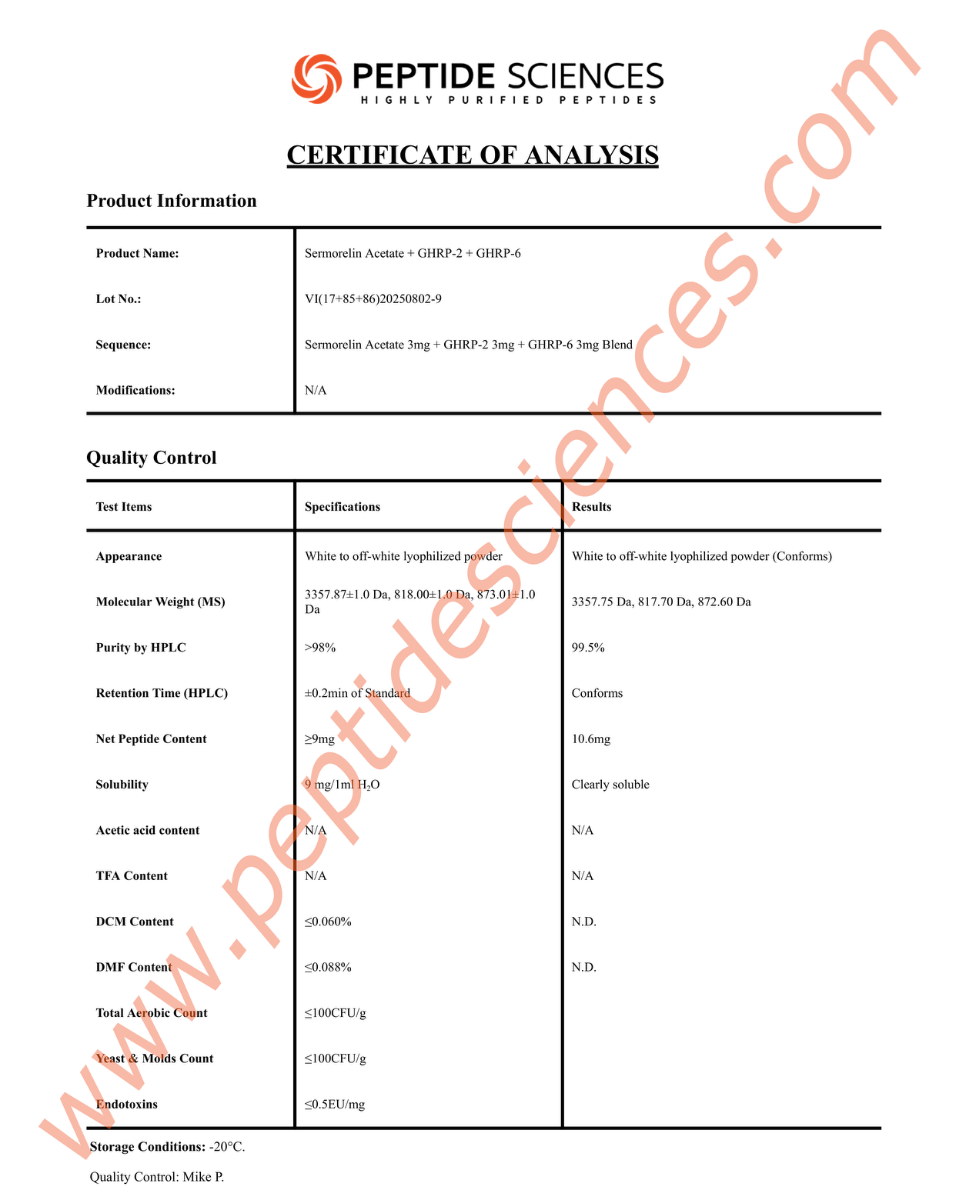
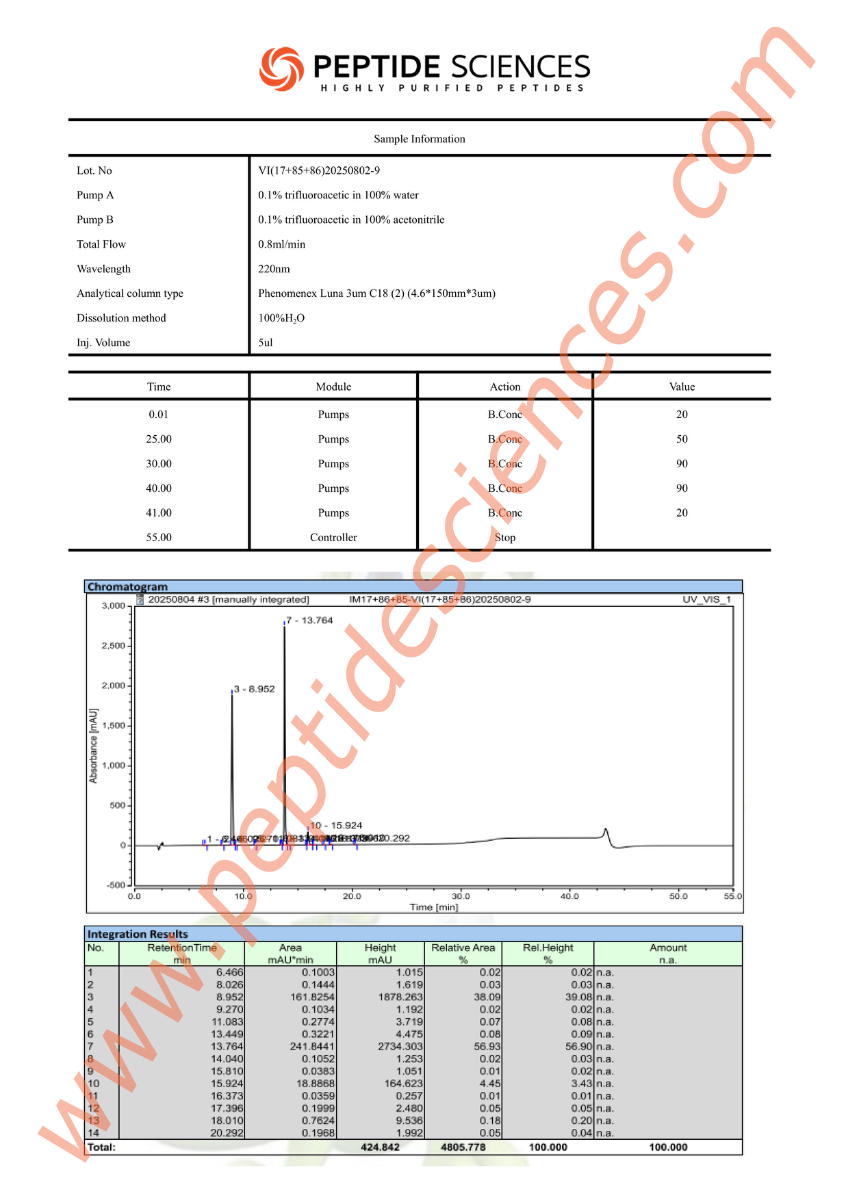
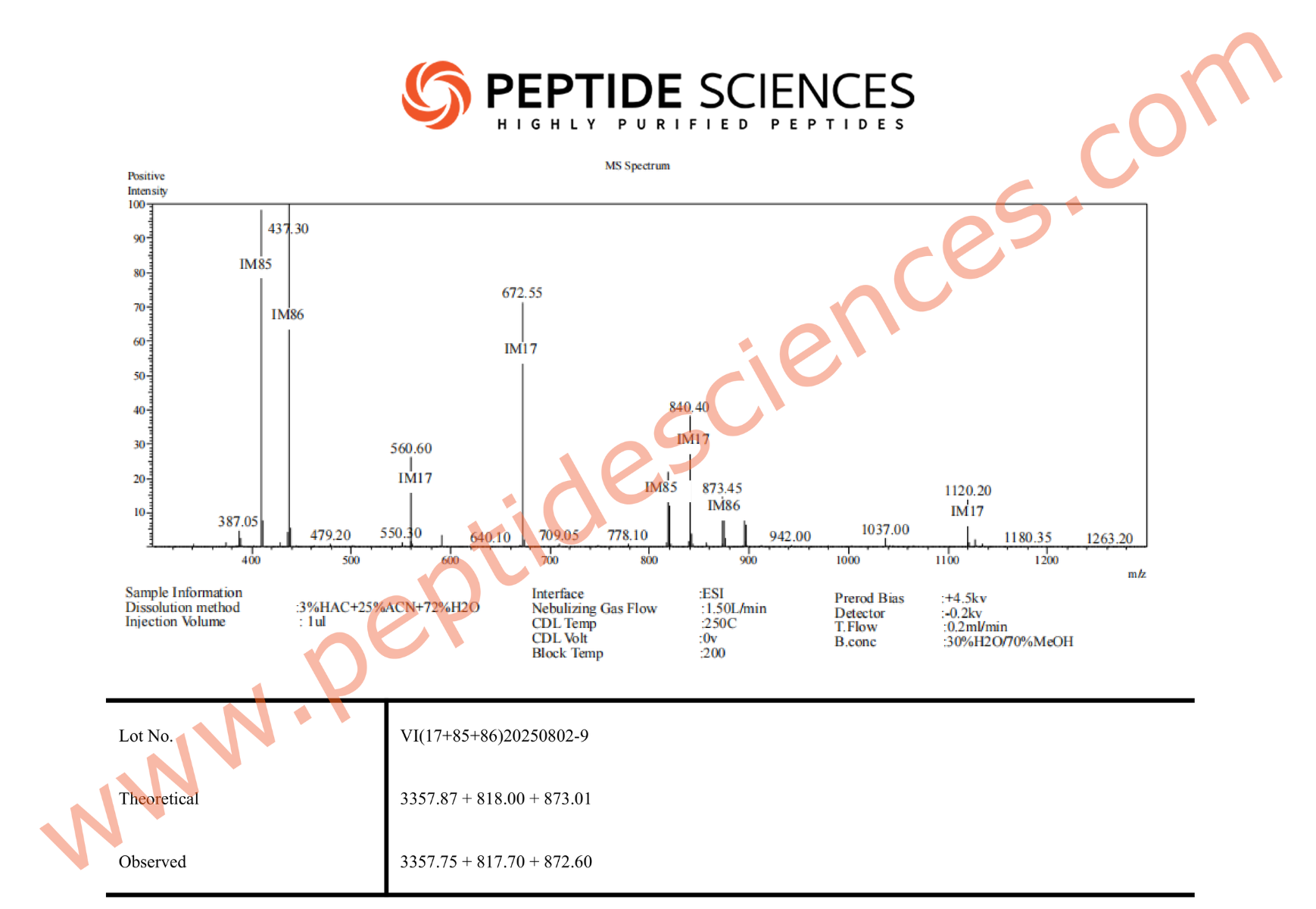
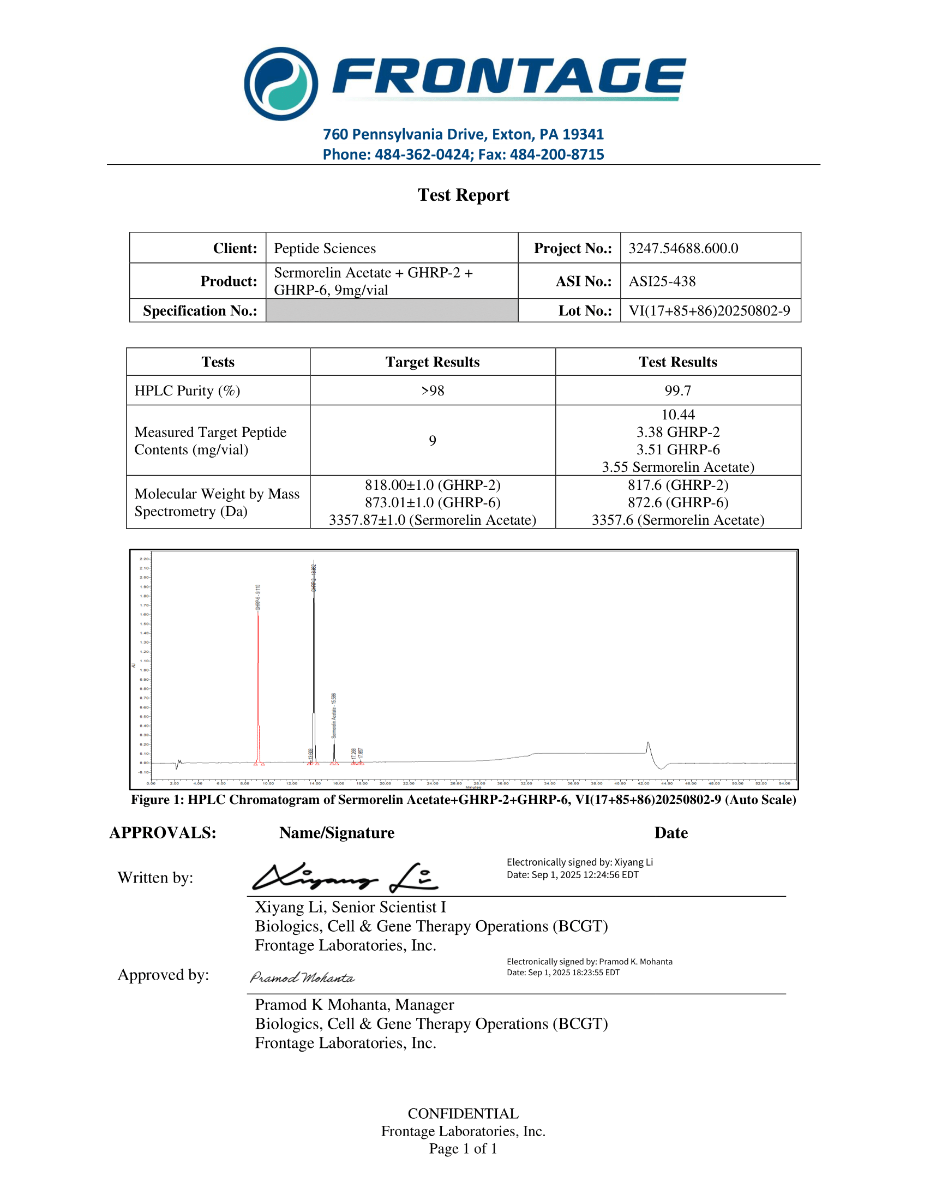
This formulation is supplied as a research-grade peptide material intended exclusively for laboratory use. Analytical characterization may include peptide identity confirmation, purity assessment, and stability evaluation using standard techniques such as high-performance liquid chromatography (HPLC) and mass spectrometry (MS), as documented in batch-specific analytical reports.
RUO Disclaimer
For Laboratory Research Only. Not for human use, medical use, diagnostic use, or veterinary use.
Article Author
The above literature was researched, edited and organized by Dr. Logan, M.D. Dr. Logan holds a doctorate degree from Case Western Reserve University School of Medicine and a B.S. in molecular biology.
Scientific Journal Author
Richard F. Walker, Ph.D, R.Ph, lead author of A better approach to management of adult-onset growth hormone insufficiency?”, received a BS in pharmacy from Rutgers University, a MS in Biochemistry from New Mexico State University and a PhD in a physiology from Rutgers University. He holds postdoctoral fellowships in neuroendocrinology and neuropharmacology at Duke University College of Medicine (Center for the Study of Aging and Human Development) and the University of California, Berkeley, respectively.
Richard F. Walker, Ph.D, R.Ph is being referenced as one of the leading scientists involved in the research and development of Sermorelin. In no way is this doctor/scientist endorsing or advocating the purchase, sale, or use of this product for any reason. There is no affiliation or relationship, implied or otherwise, between Peptide Sciences and this doctor. The purpose of citing the doctor is to acknowledge, recognize, and credit the exhaustive research and development efforts conducted by the scientists studying this peptide. Richard F. Walker, Ph.D, R.Ph is listed in [22] under the referenced citations.
Resources
- R. Hu et al., “Effects of GHRP-2 and Cysteamine Administration on Growth Performance, Somatotropic Axis Hormone and Muscle Protein Deposition in Yaks (Bos grunniens) with Growth Retardation,” PloS One, vol. 11, no. 2, p. e0149461, 2016.
- D. Yamamoto et al., “GHRP-2, a GHS-R agonist, directly acts on myocytes to attenuate the dexamethasone-induced expressions of muscle-specific ubiquitin ligases, Atrogin-1 and MuRF1,” Life Sci., vol. 82, no. 9–10, pp. 460–466, Feb. 2008. [PubMed]
- L. T. Phung et al., “The effects of growth hormone-releasing peptide-2 (GHRP-2) on the release of growth hormone and growth performance in swine,” Domest. Anim. Endocrinol., vol. 18, no. 3, pp. 279–291, Apr. 2000.[PubMed]
- B. Laferrère, C. Abraham, C. D. Russell, and C. Y. Bowers, “Growth hormone releasing peptide-2 (GHRP-2), like ghrelin, increases food intake in healthy men,” J. Clin. Endocrinol. Metab., vol. 90, no. 2, pp. 611–614, Feb. 2005.[PubMed]
- B. Laferrère, A. B. Hart, and C. Y. Bowers, “Obese subjects respond to the stimulatory effect of the ghrelin agonist growth hormone-releasing peptide-2 on food intake,” Obes. Silver Spring Md, vol. 14, no. 6, pp. 1056–1063, Jun. 2006. [PMC]
- G. Muccioli et al., “Growth hormone-releasing peptides and the cardiovascular system,” Ann. Endocrinol., vol. 61, no. 1, pp. 27–31, Feb. 2000. [PubMed]
- V. Bodart et al., “Identification and characterization of a new growth hormone-releasing peptide receptor in the heart,” Circ. Res., vol. 85, no. 9, pp. 796–802, Oct. 1999. [PubMed]
- D. D. Taub, W. J. Murphy, and D. L. Longo, “Rejuvenation of the aging thymus: growth hormone-mediated and ghrelin-mediated signaling pathways,” Curr. Opin. Pharmacol., vol. 10, no. 4, pp. 408–424, Aug. 2010. [PubMed]
- G. Copinschi et al., “Prolonged oral treatment with MK-677, a novel growth hormone secretagogue, improves sleep quality in man,” Neuroendocrinology, vol. 66, no. 4, pp. 278–286, Oct. 1997. [PubMed]
- P. Zeng et al., “Ghrelin receptor agonist, GHRP-2, produces antinociceptive effects at the supraspinal level via the opioid receptor in mice,” Peptides, vol. 55, pp. 103–109, May 2014. [PubMed]
- C.-C. Huang, D. Chou, C.-M. Yeh, and K.-S. Hsu, “Acute food deprivation enhances fear extinction but inhibits long-term depression in the lateral amygdala via ghrelin signaling,” Neuropharmacology, vol. 101, pp. 36–45, Feb. 2016. [PubMed]
- S. Beheshti and S. Shahrokhi, “Blocking the ghrelin receptor type 1a in the rat brain impairs memory encoding,” Neuropeptides, vol. 52, pp. 97–102, Aug. 2015. [Science Direct]
- K. Tóth, K. László, and L. Lénárd, “Role of intraamygdaloid acylated-ghrelin in spatial learning,” Brain Res. Bull., vol. 81, no. 1, pp. 33–37, Jan. 2010. [PubMed]
- N. Subirós et al., “Assessment of dose-effect and therapeutic time window in preclinical studies of rhEGF and GHRP-6 coadministration for stroke therapy,” Neurol. Res., vol. 38, no. 3, pp. 187–195, Mar. 2016. [PubMed]
- S. J. Spencer, A. A. Miller, and Z. B. Andrews, “The Role of Ghrelin in Neuroprotection after Ischemic Brain Injury,” Brain Sci., vol. 3, no. 1, pp. 344–359, Mar. 2013. [PMC]
- Y. Suda et al., “Down-regulation of ghrelin receptors on dopaminergic neurons in the substantia nigra contributes to Parkinson’s disease-like motor dysfunction,” Mol. Brain, vol. 11, no. 1, p. 6, 20 2018. [BMC]
- Y. Mendoza Marí et al., “Growth Hormone-Releasing Peptide 6 Enhances the Healing Process and Improves the Esthetic Outcome of the Wounds,” Plastic Surgery International, 2016. [Online]. Available: https://www.hindawi.com/journals/psi/2016/4361702/. [Accessed: 23-May-2019]. [PMC]
- M. Fernández-Mayola et al., “Growth hormone-releasing peptide 6 prevents cutaneous hypertrophic scarring: early mechanistic data from a proteome study,” Int. Wound J., vol. 15, no. 4, pp. 538–546, Aug. 2018. [PubMed]
- J. Berlanga et al., “Growth-hormone-releasing peptide 6 (GHRP6) prevents oxidant cytotoxicity and reduces myocardial necrosis in a model of acute myocardial infarction,” Clin. Sci. Lond. Engl. 1979, vol. 112, no. 4, pp. 241–250, Feb. 2007. [PubMed]
- L. Hyland et al., “Central ghrelin receptor stimulation modulates sex motivation in male rats in a site dependent manner,” Horm. Behav., vol. 97, pp. 56–66, 2018. [Science Direct]
- H.-J. Huang et al., “The protective effects of Ghrelin/GHSR on hippocampal neurogenesis in CUMS mice,” Neuropharmacology, May 2019. [PubMed]
- R. F. Walker, “Sermorelin: A better approach to management of adult-onset growth hormone insufficiency?,” Clin. Interv. Aging, vol. 1, no. 4, pp. 307–308, Dec. 2006. [PubMed]
ALL ARTICLES AND PRODUCT INFORMATION PROVIDED ON THIS WEBSITE ARE FOR INFORMATIONAL AND EDUCATIONAL PURPOSES ONLY.
The products offered on this website are furnished for in-vitro studies only. In-vitro studies (Latin: in glass) are performed outside of the body. These products are not medicines or drugs and have not been approved by the FDA to prevent, treat or cure any medical condition, ailment or disease. Bodily introduction of any kind into humans or animals is strictly forbidden by law.
RUO Disclaimer
For Laboratory Research Only. Not for human use, medical use, diagnostic use, or veterinary use.
Storage Instructions:
All of our products are manufactured using the Lyophilization (Freeze Drying) process, which ensures that our products remain 100% stable for shipping for up to 3-4 months.
Once the peptides are reconstituted (mixed with bacteriostatic water), they must be stored in the fridge to maintain stability. After reconstitution, the peptides will remain stable for up to 30 days.
Lyophilization is a unique dehydration process, also known as cryodesiccation, where the peptides are frozen and then subjected to low pressure. This causes the water in the peptide vial to sublimate directly from solid to gas, leaving behind a stable, crystalline white structure known as lyophilized peptide. The puffy white powder can be stored at room temperature until you’re ready to reconstitute it with bacteriostatic water.
Once peptides have been received, it is imperative that they are kept cold and away from light. If the peptides will be used immediately, or in the next several days, weeks or months, short-term refrigeration under 4C (39F) is generally acceptable. Lyophilized peptides are usually stable at room temperatures for several weeks or more, so if they will be utilized within weeks or months such storage is typically adequate.
However, for longer term storage (several months to years) it is more preferable to store peptides in a freezer at -80C (-112F). When storing peptides for months or even years, freezing is optimal in order to preserve the peptide’s stability.
Why Choose Our Sermorelin, GHRP-6, GHRP-2 9mg (Blend)?
When you are looking for Sermorelin, GHRP-6, GHRP-2 9mg (Blend) for sale, quality is paramount.
Our products undergo rigorous testing to ensure they meet the strict requirements of laboratory environments.
By choosing to buy Sermorelin, GHRP-6, GHRP-2 9mg (Blend) from our store, you are guaranteed a product that is:
- High Purity (Tested for 99%+)
- Fast Shipping – Always in stock
- Secure Packaging for Research Integrity
- Competitive Pricing for Bulk Orders
Specifications & Technical Data
| Feature | Specification |
|---|---|
| Product Name | Sermorelin, GHRP-6, GHRP-2 9mg (Blend) |
| SKU | 121 |
| Purity | >99% |
| Form | Research Grade Compound |
| Availability | In Stock / For Sale |
Scientific Research & Clinical Applications
The research surrounding Sermorelin, GHRP-6, GHRP-2 9mg (Blend) is vast. Scientists explore its potential in various metabolic and physiological models.
For more detailed scientific data, you can visit PubMed
to review the latest peer-reviewed literature regarding this compound.
Frequently Asked Questions
Where can I buy Sermorelin, GHRP-6, GHRP-2 9mg (Blend)?
You can buy Sermorelin, GHRP-6, GHRP-2 9mg (Blend) directly from our website. We provide a secure checkout and fast shipping to ensure your research stays on track.
Is Sermorelin, GHRP-6, GHRP-2 9mg (Blend) in stock?
Yes, we currently have Sermorelin, GHRP-6, GHRP-2 9mg (Blend) in stock. Orders are typically processed within 24 hours to ensure rapid delivery to your laboratory.
Related Research Products
If you are interested in Sermorelin, GHRP-6, GHRP-2 9mg (Blend), you may also want to explore these related products currently in stock:
- TB-500 (Thymosin Beta-4) 10mg (43aa)
- Vialox (Pentapeptide-3V) 200mg (Topical)
- Bronchogen 20mg (Bioregulator)
Disclaimer: All products listed are for research purposes only. Not for human consumption.
Related products
All Peptides

All Peptides

All Peptides

All Peptides
All Peptides

All Peptides

All Peptides

All Peptides