
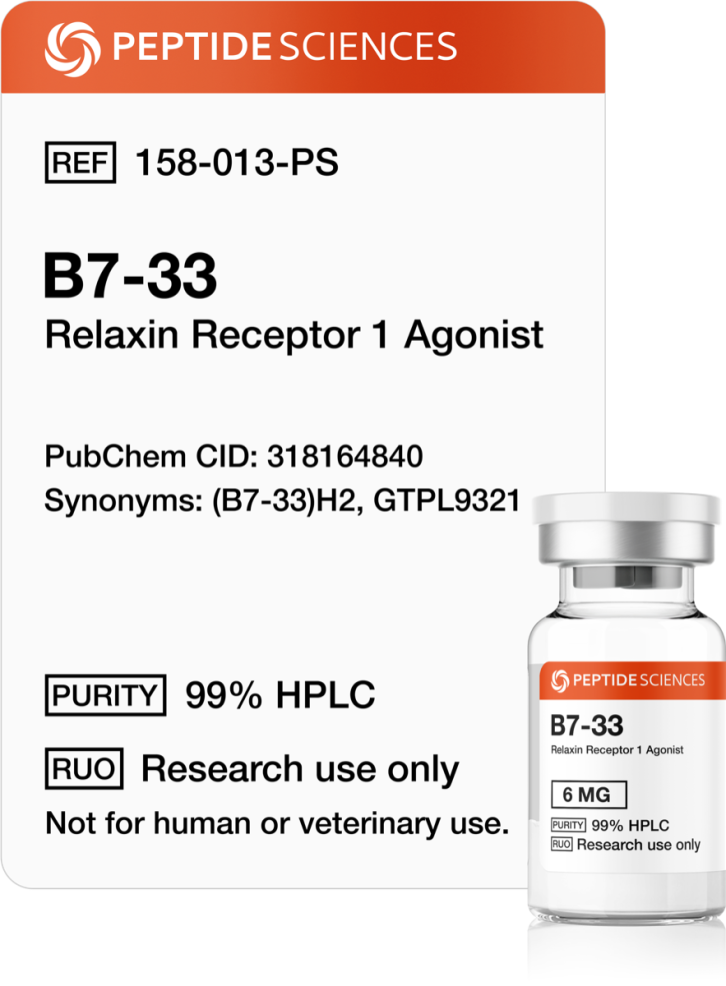
B7-33 6mg

$70.00
B7-33 is a single-chain relaxin-family peptide analog derived from human H2 relaxin, designed to selectively activate the RXFP1 receptor without engaging RXFP2. It modulates ERK1/2 signaling and nitric oxide synthesis in cardiac and vascular tissues under experimental conditions. B7-33 is used in receptor biology research focused on peptide-based GPCR signaling and cytoprotective mechanisms.
For research use only. Not for human consumption.
References:
Hossain MA et al., Chem Sci, 2016 7(6):3805–3813
Chan LJ et al., Br J Pharmacol, 2012 165(8):2612–2626
Bathgate RAD et al., Front Endocrinol (Lausanne), 2013 4:13
🔥 Exclusive Crypto Offer
Get an INSTANT 15% DISCOUNT when you pay with Bitcoin, Ethereum, Dogecoin, Bitcoin Cash, XRP, Solana, or USDT.
⚡ Don't have crypto? Buy it here in 5 minutes with easy guidance.
B7-33 6mg – Buy High-Quality B7-33 6mg Online
Looking to buy B7-33 6mg for your research laboratory? You have come to the right place.
We currently have B7-33 6mg for sale and it is in stock and ready for immediate shipping.
Our B7-33 6mg is of the highest purity, making it the best B7-33 6mg online for scientific studies.
Product Overview
B7-33 6mg is a premium research compound widely utilized in various scientific studies.
Researchers seeking to buy B7-33 6mg online often prioritize purity and consistency.
This compound has been studied extensively for its unique biochemical properties and its role in cellular pathways.
Overview
B7-33 is a synthetically produced single-chain peptide derived from structural regions of the H2-relaxin protein. In laboratory research settings, B7-33 is utilized as a selective molecular probe for investigating relaxin receptor signaling bias, extracellular matrix regulation, and receptor-mediated kinase pathway activation in cellular and animal model systems.
Unlike full-length relaxin peptides, B7-33 exhibits altered receptor signaling profiles that allow researchers to examine downstream pathway selectivity without broad second-messenger activation. All descriptions herein are limited strictly to mechanistic and preclinical research contexts.
Biochemical Characteristics
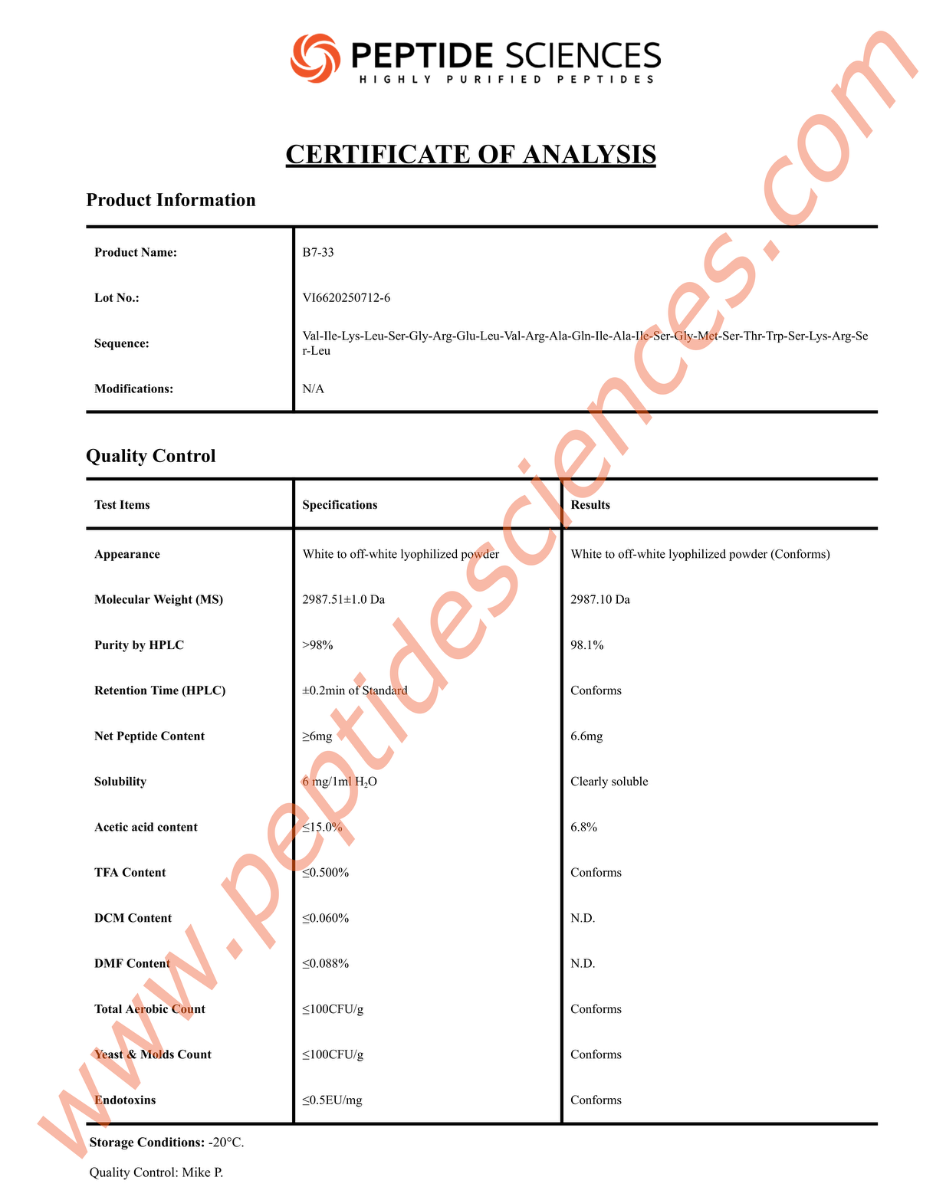
Sequence: VIKLSGRELVRAQIAISGMSTWSKRSL
PubChem CID: 318164840
Synonyms: (B7-33)H2, GTPL9321
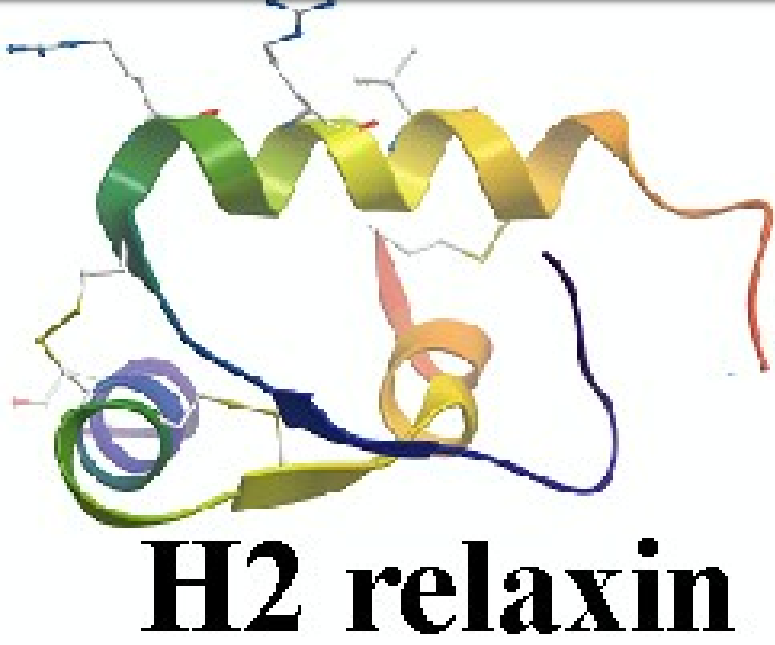

Source: Chemical Science
Research Applications
B7-33 is employed in research environments to study receptor-biased signaling at the relaxin family peptide receptor 1 (RXFP1). Experimental use focuses on quantifying kinase activation profiles, extracellular matrix turnover markers, and receptor heterodimerization behavior using molecular, cellular, and histological assays.
Additional applications include evaluation of peptide-mediated modulation of matrix metalloproteinase expression, collagen organization, and signaling pathway selectivity in in-vitro systems and in-vivo animal models.
Pathway / Mechanistic Context
B7-33 demonstrates preferential activation of extracellular signal-regulated kinase (ERK1/2) signaling following RXFP1 receptor engagement, with minimal activation of cyclic AMP–dependent pathways. This signaling bias enables targeted examination of kinase-driven transcriptional and post-translational responses.
Mechanistic studies indicate that RXFP1 activation by B7-33 facilitates receptor interaction with angiotensin II type-2 receptors, contributing to downstream modulation of matrix-associated signaling networks. These interactions are assessed using phosphorylation assays, gene expression profiling, and extracellular matrix component analysis.
Preclinical Research Summary
In preclinical animal and cellular studies, B7-33 has been investigated for its effects on extracellular matrix composition, metalloproteinase regulation, and vascular signaling endpoints. Experimental outcomes are measured using histological staining, biochemical quantification, and receptor signaling assays.
Additional research explores the incorporation of B7-33 into biomaterial coatings to evaluate cellular responses to implanted substrates, focusing on matrix deposition and capsule formation in controlled experimental systems.
Form & Analytical Testing
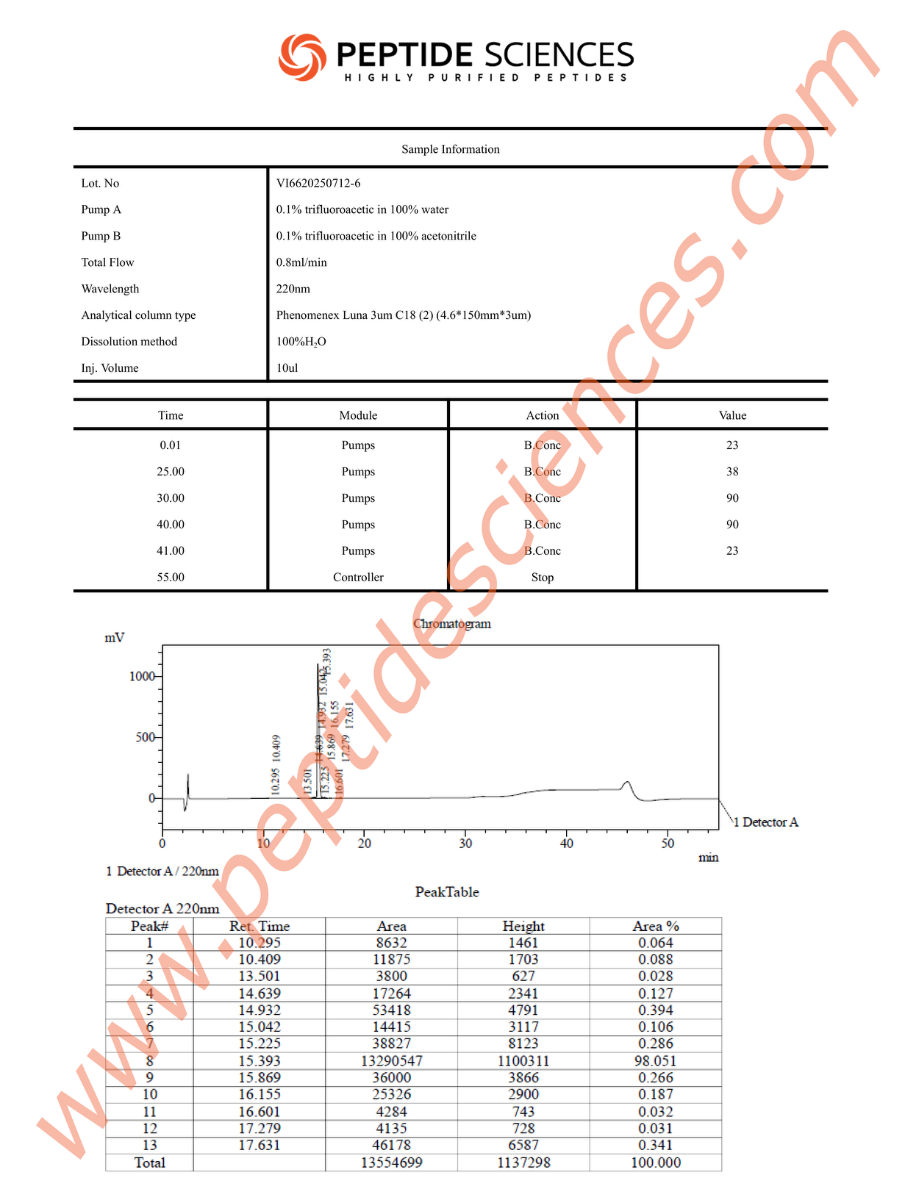
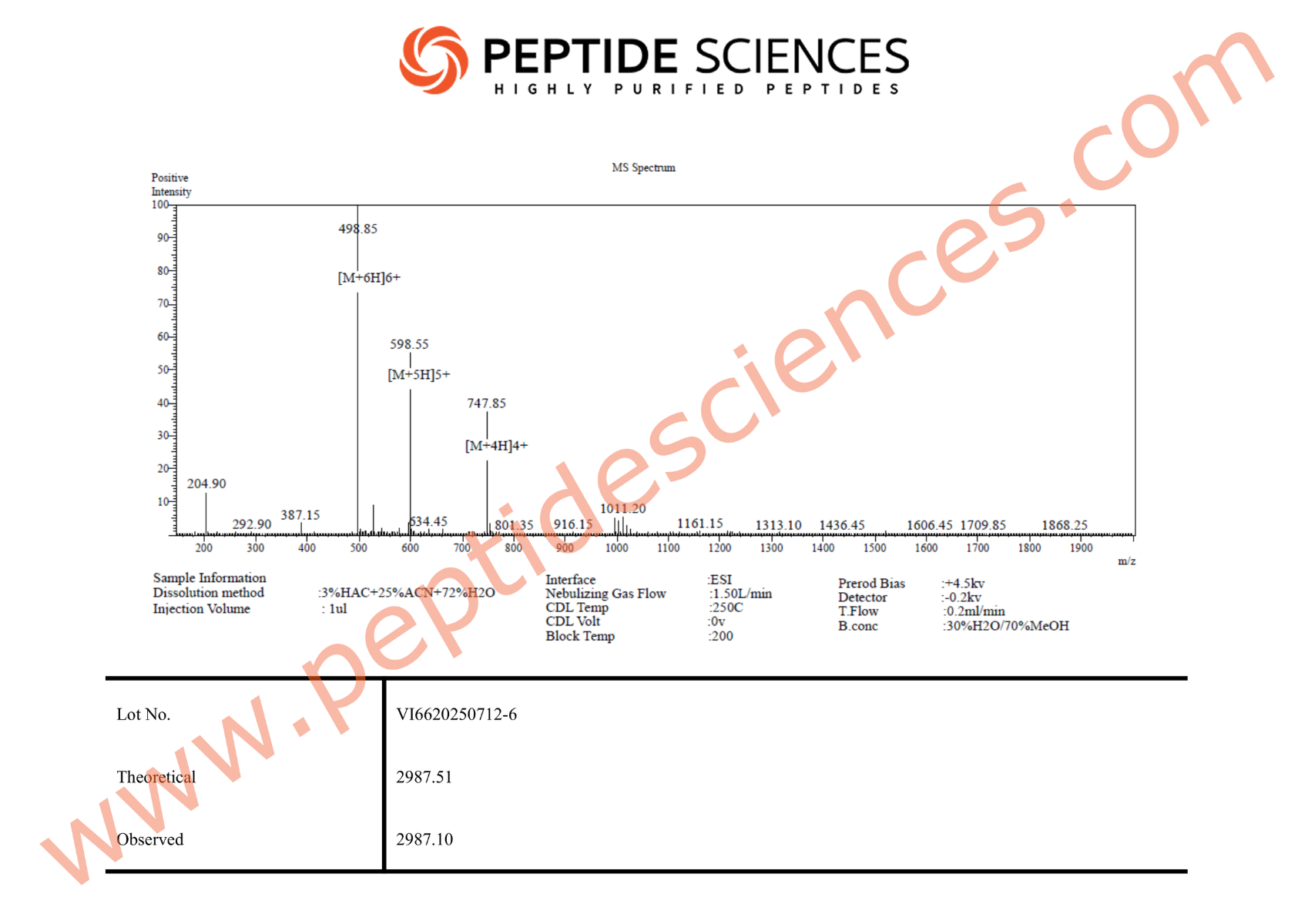
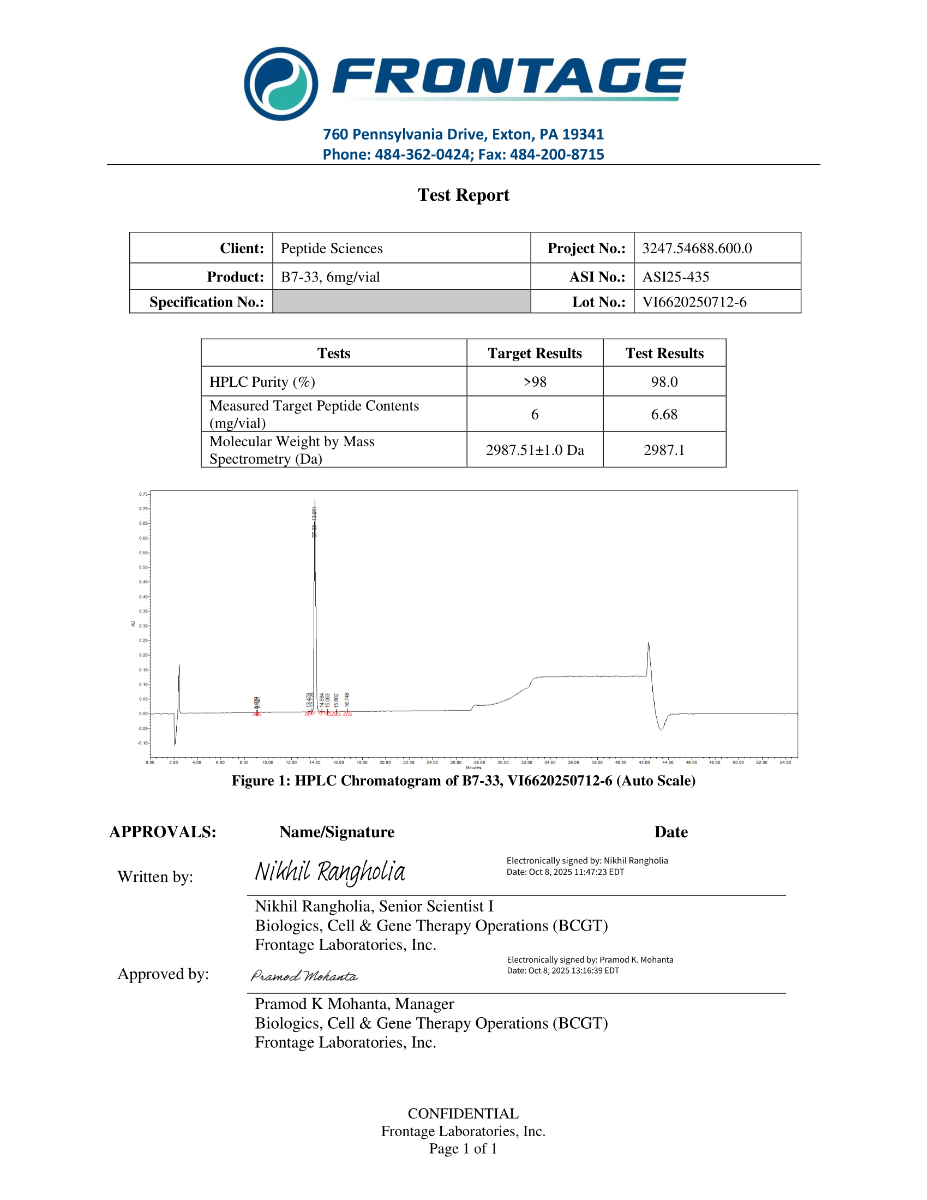
B7-33 is supplied as a synthetic research peptide intended for laboratory use only. Identity and purity are verified using analytical techniques such as high-performance liquid chromatography (HPLC) and mass spectrometry (MS).
This material is not formulated for diagnostic, medical, veterinary, or clinical application.
Article Author
The above literature was researched, edited and organized by Dr. E. Logan, M.D. Dr. E. Logan holds a doctorate degree from Case Western Reserve University School of Medicine and a B.S. in molecular biology.
Scientific Journal Author
Dr. Hossain is being referenced as one of the leading scientists involved in the research and development of B7-33. In no way is this doctor/scientist endorsing or advocating the purchase, sale, or use of this product for any reason. There is no affiliation or relationship, implied or otherwise, between Peptide Sciences and this doctor.
Referenced Citations
- R. J. Summers, “Recent progress in the understanding of relaxin family peptides and their receptors,” Br. J. Pharmacol., vol. 174, no. 10, pp. 915–920, 2017, doi: 10.1111/bph.13778.
- “RXFP1 Gene – GeneCards | RXFP1 Protein | RXFP1 Antibody.” [Online]. Available: https://www.genecards.org/cgi-bin/carddisp.pl?gene=RXFP1. [Accessed: 18-Mar-2020].
- “RXFP2 Gene – GeneCards | RXFP2 Protein | RXFP2 Antibody.” [Online]. Available: https://www.genecards.org/cgi-bin/carddisp.pl?gene=RXFP2. [Accessed: 18-Mar-2020].
- “RXFP3 Gene – GeneCards | RL3R1 Protein | RL3R1 Antibody.” [Online]. Available: https://www.genecards.org/cgi-bin/carddisp.pl?gene=RXFP3. [Accessed: 18-Mar-2020].
- J. Grosse et al., “Insulin-like peptide 5 is an orexigenic gastrointestinal hormone,” Proc. Natl. Acad. Sci., vol. 111, no. 30, pp. 11133–11138, Jul. 2014, doi: 10.1073/pnas.1411413111.
- M. A. Hossain et al., “A single-chain derivative of the relaxin hormone is a functionally selective agonist of the G protein-coupled receptor, RXFP1,” Chem. Sci., vol. 7, no. 6, pp. 3805–3819, 2016, doi: 10.1039/C5SC04754D.
- J. D. Silvertown, J. Ng, T. Sato, A. J. Summerlee, and J. A. Medin, “H2 relaxin overexpression increases in vivo prostate xenograft tumor growth and angiogenesis,” Int. J. Cancer, vol. 118, no. 1, pp. 62–73, Jan. 2006, doi: 10.1002/ijc.21288.
- S. Feng et al., “Relaxin promotes prostate cancer progression,” Clin. Cancer Res. Off. J. Am. Assoc. Cancer Res., vol. 13, no. 6, pp. 1695–1702, Mar. 2007, doi: 10.1158/1078-0432.CCR-06-2492.
- S. A. Marshall et al., “B7-33 replicates the vasoprotective functions of human relaxin-2 (serelaxin),” Eur. J. Pharmacol., vol. 807, pp. 190–197, Jul. 2017, doi: 10.1016/j.ejphar.2017.05.005.
- Afroze Syeda H et al., “Abstract P3042: Novel Peptide B7-33 and It’s Lipidated Derivative Protect Cytotrophoblasts From Preeclampsia Phenotype in a Cellular Model of the Syndrome,” Hypertension, vol. 74, no. Suppl_1, pp. AP3042–AP3042, Sep. 2019, doi: 10.1161/hyp.74.suppl_1.P3042.
- “Coatings Releasing the Relaxin Peptide Analogue B7-33 Reduce Fibrotic Encapsulation | Request PDF.” [Online]. Available: https://www.researchgate.net/publication/337205944_Coatings_Releasing_the_Relaxin_Peptide_Analogue_B7-33_Reduce_Fibrotic_Encapsulation. [Accessed: 19-Mar-2020].
ALL ARTICLES AND PRODUCT INFORMATION PROVIDED ON THIS WEBSITE ARE FOR INFORMATONAL AND EDUCATIONAL PURPOSES ONLY.
RUO Disclaimer
The products offered on this website are furnished for in-vitro studies only. In-vitro studies (Latin: in glass) are performed outside of the body. These products are not medicines or drugs and have not been approved by the FDA to prevent, treat or cure any medical condition, ailment or disease. Bodily introduction of any kind into humans or animals is strictly forbidden by law.
For Laboratory Research Only. Not for human use, medical use, diagnostic use, or veterinary use.
Storage Instructions:
All of our products are manufactured using the Lyophilization (Freeze Drying) process, which ensures that our products remain 100% stable for shipping for up to 3-4 months.
Once the peptides are reconstituted (mixed with bacteriostatic water), they must be stored in the fridge to maintain stability. After reconstitution, the peptides will remain stable for up to 30 days.
Lyophilization is a unique dehydration process, also known as cryodesiccation, where the peptides are frozen and then subjected to low pressure. This causes the water in the peptide vial to sublimate directly from solid to gas, leaving behind a stable, crystalline white structure known as lyophilized peptide. The puffy white powder can be stored at room temperature until you’re ready to reconstitute it with bacteriostatic water.
Once peptides have been received, it is imperative that they are kept cold and away from light. If the peptides will be used immediately, or in the next several days, weeks or months, short-term refrigeration under 4C (39F) is generally acceptable. Lyophilized peptides are usually stable at room temperatures for several weeks or more, so if they will be utilized within weeks or months such storage is typically adequate.
However, for longer term storage (several months to years) it is more preferable to store peptides in a freezer at -80C (-112F). When storing peptides for months or even years, freezing is optimal in order to preserve the peptide’s stability.
For further information on proper storage techniques, click the link below:
Peptide Storage Information
Hallmarks of Aging Part 3 of 4
The human body is an intricate system of cells, tissues, and organs that work together to maintain balance and optimal health. One crucial aspect of this balance is the proper functioning of various biological processes, including proteostasis, immune response, and gut microbiome. However, when these processes become disrupted or dysfunctional, it can lead to a range of health problems, including chronic diseases and disorders.
Interestingly, these processes are also hallmarks of aging, and as we age, our ability to maintain proper proteostasis, immune response, and gut microbiome balance can become compromised. In this blog post, we will explore the connections between the loss of proteostasis, disabled macrophages, and dysbiosis, and how they can contribute to the development of various health issues, especially as we age.
We will examine the role of proteostasis in maintaining proper protein folding and degradation, the importance of macrophages in immune response and the consequences of their dysfunction, as well as the impact of gut dysbiosis on overall health. By understanding the complex interplay between these biological processes and aging, we can gain insights into how to better promote optimal health and prevent age-related diseases.
So, let’s dive deeper into the world of proteostasis, disabled macrophages, and dysbiosis, and how they impact our health.
Loss of Proteostasis
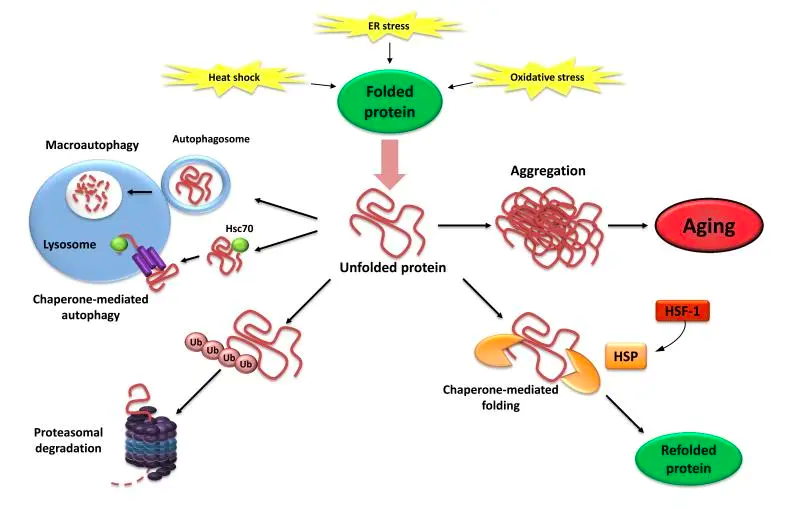
One of the hallmarks of aging is the “loss of proteostasis,” which refers to the inability of cells to maintain the proper folding, assembly, and degradation of proteins. Proteostasis is essential for maintaining the health and function of cells, and its decline is believed to contribute to the development of age-related diseases.
The loss of proteostasis can lead to the accumulation of damaged or misfolded proteins, which can form aggregates and disrupt cellular function. These aggregates are often found in the brains of individuals with neurodegenerative diseases, such as Alzheimer’s and Parkinson’s.
Furthermore, the loss of proteostasis is the accumulation of misfolded proteins, such as amyloid beta and tau, in the brain, which is a hallmark of Alzheimer’s disease. As people age, the brain’s ability to clear these misfolded proteins becomes impaired, leading to their accumulation and subsequent damage to brain cells. Researchers are investigating strategies to enhance the brain’s ability to clear misfolded proteins. One approach is to use drugs that target the activity of enzymes responsible for clearing misfolded proteins, such as the proteasome and autophagy pathways.
What is B7-33?
B7-33 is a novel, synthetic compound that was first discovered and developed by a team of researchers at the Monash University in Australia. The development of B7-33 was based on the discovery of the relaxin receptor 1 (RXFP1) and the recognition of its potential as a therapeutic target for a wide range of diseases and conditions.
The research team, led by Professor David Handelsman, first synthesized B7-33 in the early 2010s as part of their efforts to develop a functionally selective agonist for RXFP1. This compound was then tested in a series of in vitro and in vivo studies, which demonstrated its potential as a treatment for hypertension, kidney disease, and heart failure. The team’s research on B7-33 was published in several scientific journals, including the Journal of Biological Chemistry and the Journal of Hypertension. These publications highlighted the compound’s unique mechanism of action and its potential as a treatment option for patients.
How does B7-33 work?
B7-33 is a functionally selective agonist for the relaxin receptor 1 (RXFP1), meaning that it specifically activates this receptor and its associated signaling pathways. RXFP1 is a G-protein-coupled receptor that is activated by the hormone relaxin and its related peptides. When activated, RXFP1 stimulates the production of the second messenger cyclic adenosine monophosphate (cAMP) and the subsequent activation of protein kinase A (PKA). This leads to a variety of physiological effects, such as vasodilation, decreased blood pressure, and improved kidney function. B7-33 specifically binds to and activates RXFP1. This binding leads to the activation of the cAMP-PKA pathway, which causes vasodilation and decreased blood pressure. Additionally, B7-33 has been shown to improve kidney function through increasing the blood flow to the kidney and decreasing the expression of pro-inflammatory proteins. By binding and activating RXFP1, B7-33 may mimic the effects of relaxin and related peptides, providing a potential treatment option for hypertension, kidney disease, and heart failure.
Based on the literature, B7-33 has been shown help:
• Hypertension: B7-33 has been shown to decrease blood pressure in animal models of hypertension through its ability to activate the relaxin receptor 1 (RXFP1) and the subsequent activation of the cAMP-PKA pathway, which leads to vasodilation.
• Kidney disease: B7-33 has been shown to improve kidney function in animal models of kidney disease. Studies have shown that it increases blood flow to the kidney, decreases the expression of pro-inflammatory proteins, and improves the kidney’s ability to filter waste from the blood.
• Heart failure: B7-33 has been shown to improve cardiac function in animal models of heart failure, likely through its ability to improve blood flow to the heart and decrease inflammation.
Why Choose Our B7-33 6mg?
When you are looking for B7-33 6mg for sale, quality is paramount.
Our products undergo rigorous testing to ensure they meet the strict requirements of laboratory environments.
By choosing to buy B7-33 6mg from our store, you are guaranteed a product that is:
- High Purity (Tested for 99%+)
- Fast Shipping – Always in stock
- Secure Packaging for Research Integrity
- Competitive Pricing for Bulk Orders
Specifications & Technical Data
| Feature | Specification |
|---|---|
| Product Name | B7-33 6mg |
| SKU | 9 |
| Purity | >99% |
| Form | Research Grade Compound |
| Availability | In Stock / For Sale |
Scientific Research & Clinical Applications
The research surrounding B7-33 6mg is vast. Scientists explore its potential in various metabolic and physiological models.
For more detailed scientific data, you can visit PubMed
to review the latest peer-reviewed literature regarding this compound.
Frequently Asked Questions
Where can I buy B7-33 6mg?
You can buy B7-33 6mg directly from our website. We provide a secure checkout and fast shipping to ensure your research stays on track.
Is B7-33 6mg in stock?
Yes, we currently have B7-33 6mg in stock. Orders are typically processed within 24 hours to ensure rapid delivery to your laboratory.
Related Research Products
If you are interested in B7-33 6mg, you may also want to explore these related products currently in stock:
Disclaimer: All products listed are for research purposes only. Not for human consumption.
Related products
All Peptides

All Peptides

All Peptides

All Peptides

All Peptides
All Peptides

All Peptides
All Peptides