
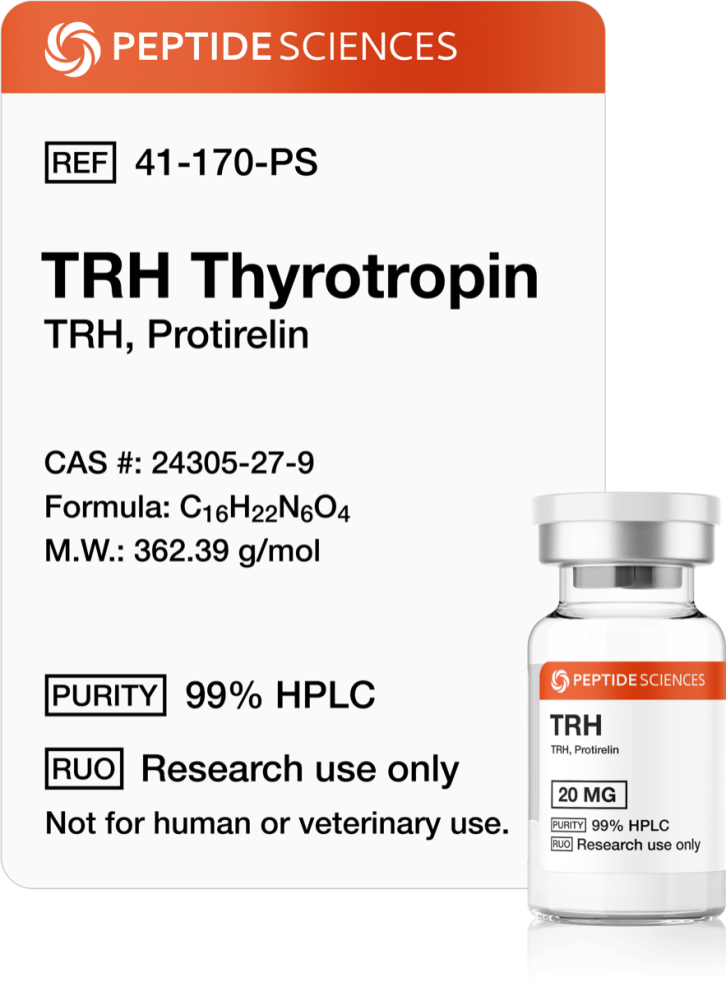
TRH Thyrotropin (Protirelin) 50mg
$200.00
Thyrotropin releasing hormone (TRH or Protirelin) is a research peptide consisting of the tripeptide sequence pGlu-His-Pro-NH₂. It functions as a hypothalamic regulatory peptide that modulates pituitary secretion of thyrotropin (TSH) and prolactin through activation of the TRH receptor, a Gq-coupled GPCR. This interaction stimulates phospholipase C, IP₃, and intracellular Ca²⁺ signaling cascades involved in pituitary–thyroid axis regulation. TRH is utilized in preclinical studies of neuroendocrine feedback, receptor coupling, and second-messenger signal transduction.
For research use only. Not for human consumption.
References:
Lechan RM & Fekete C, Physiol Rev, 2004;84(1):109-134
Joseph-Bravo P et al., J Endocrinol, 2015;226(2):T85
Trubacova R et al., Front Cell Dev Biol, 2022;10:981452
TRH Thyrotropin (Protirelin) 50mg – Buy High-Quality TRH Thyrotropin (Protirelin) 50mg Online
Looking to buy TRH Thyrotropin (Protirelin) 50mg for your research laboratory? You have come to the right place.
We currently have TRH Thyrotropin (Protirelin) 50mg for sale and it is in stock and ready for immediate shipping.
Our TRH Thyrotropin (Protirelin) 50mg is of the highest purity, making it the best TRH Thyrotropin (Protirelin) 50mg online for scientific studies.
Product Overview
TRH Thyrotropin (Protirelin) 50mg is a premium research compound widely utilized in various scientific studies.
Researchers seeking to buy TRH Thyrotropin (Protirelin) 50mg online often prioritize purity and consistency.
This compound has been studied extensively for its unique biochemical properties and its role in cellular pathways.
Overview
Thyrotropin-releasing hormone (TRH; also known as protirelin) is a compact tripeptide (pyroglutamyl-histidyl-proline amide) endogenously produced by hypothalamic neurons and distributed across multiple brain regions. In experimental neuroendocrinology, TRH is widely used as a mechanistic probe to interrogate hypothalamic–pituitary signaling, peptide GPCR activation, and downstream second-messenger dynamics. Beyond endocrine axis biology, TRHergic circuitry has been examined in preclinical models of cerebellar synaptic plasticity, autonomic regulation, and integrative brainstem control of cardio-respiratory outputs.
Biochemical Characteristics
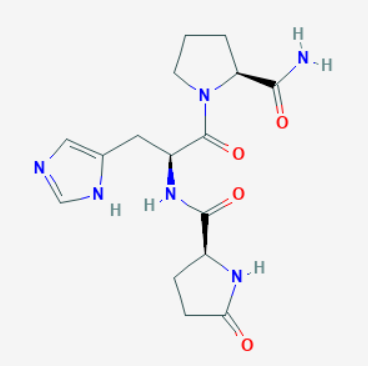
Source: PubChem
Sequence: Pyr-His-Pro
Molecular Formula: C16H22N6O4
Molecular Weight: 362.39 g/mol
PubChem CID: 638678
CAS Number: 24305-27-9
Synonyms: Protirelin, Thyroliberin, Lopremone, Relefact
TRH is a compact, polar peptide with rapid susceptibility to enzymatic turnover in biological matrices. In mechanistic workflows, TRH is applied as a receptor ligand to quantify TRH receptor (TRHR) signaling and downstream readouts such as phospholipase C activation, inositol phosphate production, intracellular Ca2 mobilization, and phosphorylation/dephosphorylation-dependent pathway changes in relevant model systems.
Research Applications
- Neuroendocrine signaling models: TRH is used as a probe for hypothalamic–pituitary axis circuitry, TRHR pharmacology, and hormone-release pathway mapping in cell-based, ex vivo, and in vivo animal systems.
- Cerebellar synaptic plasticity: TRH has been studied as a modulatory input in rodent models investigating cerebellar long-term depression (LTD) and associated motor-learning phenotypes.
- Autonomic network physiology: In rodent preparations, TRH has been evaluated for effects on integrative brainstem outputs, including experimentally measured respiratory and cardiovascular parameters.
- Analog comparison studies: TRH is frequently benchmarked against metabolically stabilized analogs (e.g., taltirelin) to evaluate duration-of-action and signaling persistence in preclinical assay systems.
Pathway / Mechanistic Context
TRH activates TRH receptors (TRHR family GPCRs), which are commonly associated with Gq/11-mediated phosphoinositide signaling. Canonical downstream events include phospholipase C activation, generation of IP3 and DAG, Ca2 -dependent signaling, and protein kinase activation with measurable phosphorylation state changes in target proteins. In neuronal circuits, TRHergic signaling has been examined for its capacity to modulate excitability and synaptic integration through activity-dependent signaling cascades.
In cerebellar research contexts, TRH has been evaluated as a neuromodulator influencing LTD-related molecular pathways and procedural learning behaviors in rodents. In autonomic physiology models, TRH has been investigated in relation to brainstem network activity that shapes respiratory and cardiovascular outputs under controlled experimental conditions.
Preclinical Research Summary
Cerebellar LTD and motor learning (rodent models): Genetic and experimental paradigms have been used to evaluate the contribution of TRH signaling to cerebellar LTD and performance across repeated motor task trials in mice[5].
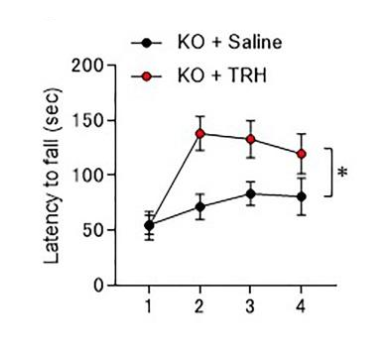
Knockout mice treated with TRH learned much faster after four trials, with time before falling from rotating rod being nearly twice that of untreated mice. This shows improved rates of motor learning
Source: PubMed
Respiratory physiology (anesthetized rat preparations): TRH and TRH analogs have been assessed in rodent paradigms quantifying ventilation under pharmacologically induced respiratory depression[7].
Hemodynamic stress models (rat hemorrhage): Metabolically stabilized TRH analogs (e.g., taltirelin) have been examined in acute rat models measuring arterial pressure, respiratory parameters, and blood gas/acid–base indices following controlled hemorrhage[8].
Neuroanatomical/circuit context: Reviews summarize TRH localization, receptor distribution, and proposed neuromodulatory roles in cerebellar and broader CNS networks relevant to plasticity and motor coordination research[6].
Form & Analytical Testing
Article Author
The above literature was researched, edited and organized by Dr. Logan, M.D. Dr. Logan holds a doctorate degree from Case Western Reserve University School of Medicine and a B.S. in molecular biology.
Scientific Journal Author
Prof. Walter Pierpaoli was born in 1934 in Milan. He graduated with honors in Medicine and Surgery in 1960. After a major in Cardiology and a period as Assistant Hospital and practical activity (Medical Office), taught as an Assistant at the Institute of General Pathology, University of Milan, conducting research in biophysics (photodynamic effect) and taking advantage of a scholarship of the Atomic Energy Commission of the United States. Prof. Pierpaoli promoted first by many years the medical interdisciplinary now called “Neuroimmunomodulation”, to which now devote thousands of researchers. He devised, based on his original research, interventions against diseases of aging and is conducting for many years in Seattle, in the United States, with a group of researchers at the well-known Fred Hutchinson Cancer Research Center, research started in 1978 and based on a new method of transplants that can modify the immune system and prevent the organ rejection. This project, protected by worldwide patents, is in a very advanced stage of development and will provide the first clinical internships widespread pathologies, including diabetes and cancer. Prof. Pierpaoli has published over 140 scientific papers experimental, published in the best scientific journals such as Nature, (7 items), the Journal of the National Cancer Institute – USA, Proceedings of the National Academy of Sciences – USA and many others.
Notable achievements:
- Founded the Stromboli Conference on Aging and Cancer in Italy; 2004
- Director of Biancalana – Masera Foundation for the aged in Ancona Italy.
- Granted the award for Excellence in Anti-Aging Medicine, from the Monte Carlo Antiaging Conference ™
Author of the following books:
- Reversal of Aging – Resetting the Pineal Clock
- Reversal of Aging – Myth and Reality: Beyond the man made barriers
- The Aging Clock
- The Melatonin Miracle
- Physiological Senescence and Its Postponement: Theoretical Approaches and Rational Interventions
- Neuroimmunomodulation: Interventions in Aging and Cancer
Thyrotropin-releasing hormone (TRH) aroused their interest when they were engaged in related experiments, so they decided to study its effects on organs, tissues, and aging-related metabolic and hormonal markers when administered in acute or chronic (oral) doses at various time points in its cyclic circadian pattern.
Prof. Walter Pierpaoli is being referenced as one of the leading scientists involved in the research and development of [peptide name here]. In no way is this doctor/scientist endorsing or advocating the purchase, sale, or use of this product for any reason. There is no affiliation or relationship, implied or otherwise, between Peptide Sciences and this doctor.
Referenced Citations
- L. B. Marangell et al., “Effects of intrathecal thyrotropin-releasing hormone (protirelin) in refractory depressed patients,” Arch. Gen. Psychiatry, vol. 54, no. 3, pp. 214–222, Mar. 1997. [PubMed]
- R. Bunevicius and V. Matulevicius, “Short-lasting behavioural effects of thyrotropin-releasing hormone in depressed women: results of placebo-controlled study,” Psychoneuroendocrinology, vol. 18, no. 5–6, pp. 445–449, 1993. [PubMed]
- A. M. Callahan et al., “Comparative antidepressant effects of intravenous and intrathecal thyrotropin-releasing hormone: confounding effects of tolerance and implications for therapeutics,” Biol. Psychiatry, vol. 41, no. 3, pp. 264–272, Feb. 1997. [PubMed]
- M. P. Szuba et al., “Rapid antidepressant response after nocturnal TRH administration,” J. Clin. Psychopharmacol. [PubMed]
- M. Watanave et al., “Contribution of Thyrotropin-Releasing Hormone to Cerebellar Long-Term Depression and Motor Learning,” Front. Cell. Neurosci., 2018. [PubMed]
- N. Shibusawa et al., “Thyrotropin-releasing hormone (TRH) in the cerebellum,” Cerebellum, 2008. [PubMed]
- J. D. Boghosian et al., “Intravenous and Intratracheal Thyrotropin Releasing Hormone…,” J. Pharmacol. Exp. Ther., 2018. [PubMed]
- H. Asai et al., “Reversal of hemorrhagic shock in rats…,” J. Recept. Signal Transduct. Res., 2011. [PubMed]
- E. Fliers et al., “Decreased hypothalamic thyrotropin-releasing hormone gene expression…,” J. Clin. Endocrinol. Metab., 1997. [PubMed]
- W. Pierpaoli, “Aging-reversing properties of thyrotropin-releasing hormone,” Curr. Aging Sci., 2013. [PubMed]
- A. M. Mellow et al., “Acute effects of high-dose thyrotropin releasing hormone infusions in Alzheimer’s disease,” Psychopharmacology, 1989. [PubMed]
- L. Luo et al., “Thyrotropin releasing hormone (TRH) in the hippocampus of Alzheimer patients,” J. Alzheimers Dis., 2002. [PubMed]
ALL ARTICLES AND PRODUCT INFORMATION PROVIDED ON THIS WEBSITE ARE FOR INFORMATIONAL AND EDUCATIONAL PURPOSES ONLY.
RUO Disclaimer
The products offered on this website are furnished for in-vitro studies only. In-vitro studies (Latin: in glass) are performed outside of the body. These products are not medicines or drugs and have not been approved by the FDA to prevent, treat, or cure any disease or condition. Bodily introduction of any kind into humans or animals is strictly forbidden by law.
For Laboratory Research Only. Not for human use, medical use, diagnostic use, or veterinary use.
Storage Instructions:
All of our products are manufactured using the Lyophilization (Freeze Drying) process, which ensures that our products remain 100% stable for shipping for up to 3-4 months.
Once the peptides are reconstituted (mixed with bacteriostatic water), they must be stored in the fridge to maintain stability. After reconstitution, the peptides will remain stable for up to 30 days.
Lyophilization is a unique dehydration process, also known as cryodesiccation, where the peptides are frozen and then subjected to low pressure. This causes the water in the peptide vial to sublimate directly from solid to gas, leaving behind a stable, crystalline white structure known as lyophilized peptide. The puffy white powder can be stored at room temperature until you’re ready to reconstitute it with bacteriostatic water.
Once peptides have been received, it is imperative that they are kept cold and away from light. If the peptides will be used immediately, or in the next several days, weeks or months, short-term refrigeration under 4C (39F) is generally acceptable. Lyophilized peptides are usually stable at room temperatures for several weeks or more, so if they will be utilized within weeks or months such storage is typically adequate.
However, for longer term storage (several months to years) it is more preferable to store peptides in a freezer at -80C (-112F). When storing peptides for months or even years, freezing is optimal in order to preserve the peptide’s stability.
Why Choose Our TRH Thyrotropin (Protirelin) 50mg?
When you are looking for TRH Thyrotropin (Protirelin) 50mg for sale, quality is paramount.
Our products undergo rigorous testing to ensure they meet the strict requirements of laboratory environments.
By choosing to buy TRH Thyrotropin (Protirelin) 50mg from our store, you are guaranteed a product that is:
- High Purity (Tested for 99%+)
- Fast Shipping – Always in stock
- Secure Packaging for Research Integrity
- Competitive Pricing for Bulk Orders
Specifications & Technical Data
| Feature | Specification |
|---|---|
| Product Name | TRH Thyrotropin (Protirelin) 50mg |
| SKU | 146 |
| Purity | >99% |
| Form | Research Grade Compound |
| Availability | In Stock / For Sale |
Scientific Research & Clinical Applications
The research surrounding TRH Thyrotropin (Protirelin) 50mg is vast. Scientists explore its potential in various metabolic and physiological models.
For more detailed scientific data, you can visit PubMed
to review the latest peer-reviewed literature regarding this compound.
Frequently Asked Questions
Where can I buy TRH Thyrotropin (Protirelin) 50mg?
You can buy TRH Thyrotropin (Protirelin) 50mg directly from our website. We provide a secure checkout and fast shipping to ensure your research stays on track.
Is TRH Thyrotropin (Protirelin) 50mg in stock?
Yes, we currently have TRH Thyrotropin (Protirelin) 50mg in stock. Orders are typically processed within 24 hours to ensure rapid delivery to your laboratory.
Related Research Products
If you are interested in TRH Thyrotropin (Protirelin) 50mg, you may also want to explore these related products currently in stock:
Disclaimer: All products listed are for research purposes only. Not for human consumption.
Related products

All Peptides
All Peptides

All Peptides

All Peptides

All Peptides

All Peptides

All Peptides
All Peptides