

Tesamorelin 5mg

$75.00
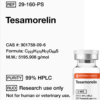
Tesamorelin is a stabilized synthetic peptide analog of growth hormone-releasing hormone (GHRH 1–44) containing a trans-3-hexenoic acid modification at position 2. It binds GHRH receptors to enhance GH synthesis and secretion in experimental settings. Tesamorelin is used in endocrine and metabolic research to examine peptide stability, receptor binding kinetics, and somatotropic axis modulation.
For research use only. Not for human consumption.
References:
Falutz J et al., Ann Intern Med, 2010 152(5):323–331;
Gelato MC et al., J Clin Endocrinol Metab, 2005 90(9):5247–5253
Stanley TL et al., J Clin Endocrinol Metab, 2014 99(3):E449–E458
Tesamorelin 5mg – Buy High-Quality Tesamorelin 5mg Online
Looking to buy Tesamorelin 5mg for your research laboratory? You have come to the right place.
We currently have Tesamorelin 5mg for sale and it is in stock and ready for immediate shipping.
Our Tesamorelin 5mg is of the highest purity, making it the best Tesamorelin 5mg online for scientific studies.
Product Overview
Tesamorelin 5mg is a premium research compound widely utilized in various scientific studies.
Researchers seeking to buy Tesamorelin 5mg online often prioritize purity and consistency.
This compound has been studied extensively for its unique biochemical properties and its role in cellular pathways.
| Properties | |
|---|---|
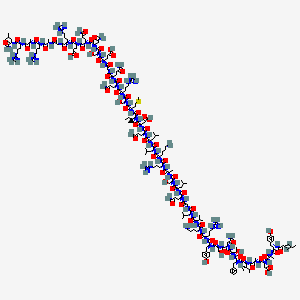
| Molecular Formula | C221H366N72O67S |
| Molecular Weight | 5136 |
| Monoisotopic Mass | 5132.7166406 |
| Polar Area | 2360 |
| Complexity | 12800 |
| XLogP | -23.3 |
| Heavy Atom Count | 361 |
| Hydrogen Bond Donor Count | 83 |
| Hydrogen Bond Acceptor Count | 76 |
| Rotatable Bond Count | 187 |
| PubChem LCSS | Tesamorelin Laboratory Chemical Safety Summary |
| Identifiers | |
|---|---|
| CID | 16137828 |
| InChI | InChI=1S/C221H366N72O67S/c1-25-28-30-53-163(308)260-145(92-120-54-58-122(299)59-55-120)198(343)255-116(21)179(324)276-150(96-169(316)317)199(344)256-117(22)180(325)291-172(111(16)26-2)214(359)284-147(91-119-43-31-29-32-44-119)206(351)293-174(118(23)298)215(360)285-149(95-162(230)307)205(350)289-155(104-297)210(355)280-146(93-121-56-60-123(300)61-57-121)203(348)267-130(51-41-83-248-220(240)241)186(331)266-126(46-34-36-78-223)197(342)290-171(110(14)15)212(357)283-141(87-106(6)7)183(328)252-100-166(311)258-133(63-70-157(225)302)190(335)278-144(90-109(12)13)202(347)288-152(101-294)208(353)257-115(20)178(323)262-128(49-39-81-246-218(236)237)185(330)265-125(45-33-35-77-222)189(334)277-143(89-108(10)11)201(346)279-142(88-107(8)9)200(345)272-137(66-73-160(228)305)195(340)282-151(97-170(318)319)207(352)292-173(112(17)27-3)213(358)274-139(76-85-361-24)196(341)287-153(102-295)209(354)268-131(52-42-84-249-221(242)243)187(332)270-135(64-71-158(226)303)192(337)269-132(62-69-156(224)301)182(327)251-99-165(310)259-134(67-74-167(312)313)191(336)286-154(103-296)211(356)281-148(94-161(229)306)204(349)273-136(65-72-159(227)304)193(338)271-138(68-75-168(314)315)194(339)264-124(47-37-79-244-216(232)233)181(326)250-98-164(309)253-113(18)176(321)261-127(48-38-80-245-217(234)235)184(329)254-114(19)177(322)263-129(50-40-82-247-219(238)239)188(333)275-140(175(231)320)86-105(4)5/h28-32,43-44,54-61,105-118,124-155,171-174,294-300H,25-27,33-42,45-53,62-104,222-223H2,1-24H3,(H2,224,301)(H2,225,302)(H2,226,303)(H2,227,304)(H2,228,305)(H2,229,306)(H2,230,307)(H2,231,320)(H,250,326)(H,251,327)(H,252,328)(H,253,309)(H,254,329)(H,255,343)(H,256,344)(H,257,353)(H,258,311)(H,259,310)(H,260,308)(H,261,321)(H,262,323)(H,263,322)(H,264,339)(H,265,330)(H,266,331)(H,267,348)(H,268,354)(H,269,337)(H,270,332)(H,271,338)(H,272,345)(H,273,349)(H,274,358)(H,275,333)(H,276,324)(H,277,334)(H,278,335)(H,279,346)(H,280,355)(H,281,356)(H,282,340)(H,283,357)(H,284,359)(H,285,360)(H,286,336)(H,287,341)(H,288,347)(H,289,350)(H,290,342)(H,291,325)(H,292,352)(H,293,351)(H,312,313)(H,314,315)(H,316,317)(H,318,319)(H4,232,233,244)(H4,234,235,245)(H4,236,237,246)(H4,238,239,247)(H4,240,241,248)(H4,242,243,249)/b30-28 /t111-,112-,113-,114-,115-,116-,117-,118 ,124-,125-,126-,127-,128-,129-,130-,131-,132-,133-,134-,135-,136-,137-,138-,139-,140-,141-,142-,143-,144-,145-,146-,147-,148-,149-,150-,151-,152-,153-,154-,155-,171-,172-,173-,174-/m0/s1 |
| InChIKey | QBEPNUQJQWDYKU-BMGKTWPMSA-N |
| Isometric SMILES | CC/C=C/CC(=O)N[C@@H](CC1=CC=C(C=C1)O)C(=O)N[C@@H](C)C(=O)N[C@@H](CC(=O)O)C(=O)N[C@@H](C)C(=O)N[C@@H]([C@@H](C)CC)C(=O)N[C@@H](CC2=CC=CC=C2)C(=O)N[C@@H]([C@@H](C)O)C(=O)N[C@@H](CC(=O)N)C(=O)N[C@@H](CO)C(=O)N[C@@H](CC3=CC=C(C=C3)O)C(=O)N[C@@H](CCCNC(=N)N)C(=O)N[C@@H](CCCCN)C(=O)N[C@@H](C(C)C)C(=O)N[C@@H](CC(C)C)C(=O)NCC(=O)N[C@@H](CCC(=O)N)C(=O)N[C@@H](CC(C)C)C(=O)N[C@@H](CO)C(=O)N[C@@H](C)C(=O)N[C@@H](CCCNC(=N)N)C(=O)N[C@@H](CCCCN)C(=O)N[C@@H](CC(C)C)C(=O)N[C@@H](CC(C)C)C(=O)N[C@@H](CCC(=O)N)C(=O)N[C@@H](CC(=O)O)C(=O)N[C@@H]([C@@H](C)CC)C(=O)N[C@@H](CCSC)C(=O)N[C@@H](CO)C(=O)N[C@@H](CCCNC(=N)N)C(=O)N[C@@H](CCC(=O)N)C(=O)N[C@@H](CCC(=O)N)C(=O)NCC(=O)N[C@@H](CCC(=O)O)C(=O)N[C@@H](CO)C(=O)N[C@@H](CC(=O)N)C(=O)N[C@@H](CCC(=O)N)C(=O)N[C@@H](CCC(=O)O)C(=O)N[C@@H](CCCNC(=N)N)C(=O)NCC(=O)N[C@@H](C)C(=O)N[C@@H](CCCNC(=N)N)C(=O)N[C@@H](C)C(=O)N[C@@H](CCCNC(=N)N)C(=O)N[C@@H](CC(C)C)C(=O)N |
| Canonical SMILES | CCC=CCC(=O)NC(CC1=CC=C(C=C1)O)C(=O)NC(C)C(=O)NC(CC(=O)O)C(=O)NC(C)C(=O)NC(C(C)CC)C(=O)NC(CC2=CC=CC=C2)C(=O)NC(C(C)O)C(=O)NC(CC(=O)N)C(=O)NC(CO)C(=O)NC(CC3=CC=C(C=C3)O)C(=O)NC(CCCNC(=N)N)C(=O)NC(CCCCN)C(=O)NC(C(C)C)C(=O)NC(CC(C)C)C(=O)NCC(=O)NC(CCC(=O)N)C(=O)NC(CC(C)C)C(=O)NC(CO)C(=O)NC(C)C(=O)NC(CCCNC(=N)N)C(=O)NC(CCCCN)C(=O)NC(CC(C)C)C(=O)NC(CC(C)C)C(=O)NC(CCC(=O)N)C(=O)NC(CC(=O)O)C(=O)NC(C(C)CC)C(=O)NC(CCSC)C(=O)NC(CO)C(=O)NC(CCCNC(=N)N)C(=O)NC(CCC(=O)N)C(=O)NC(CCC(=O)N)C(=O)NCC(=O)NC(CCC(=O)O)C(=O)NC(CO)C(=O)NC(CC(=O)N)C(=O)NC(CCC(=O)N)C(=O)NC(CCC(=O)O)C(=O)NC(CCCNC(=N)N)C(=O)NCC(=O)NC(C)C(=O)NC(CCCNC(=N)N)C(=O)NC(C)C(=O)NC(CCCNC(=N)N)C(=O)NC(CC(C)C)C(=O)N |
| IUPAC Name | (4S)-4-[[2-[[(2S)-5-amino-2-[[(2S)-5-amino-2-[[(2S)-2-[[(2S)-2-[[(2S)-2-[[(2S,3S)-2-[[(2S)-2-[[(2S)-5-amino-2-[[(2S)-2-[[(2S)-2-[[(2S)-6-amino-2-[[(2S)-2-[[(2S)-2-[[(2S)-2-[[(2S)-2-[[(2S)-5-amino-2-[[2-[[(2S)-2-[[(2S)-2-[[(2S)-6-amino-2-[[(2S)-2-[[(2S)-2-[[(2S)-2-[[(2S)-4-amino-2-[[(2S,3R)-2-[[(2S)-2-[[(2S,3S)-2-[[(2S)-2-[[(2S)-3-carboxy-2-[[(2S)-2-[[(2S)-2-[[(E)-hex-3-enoyl]amino]-3-(4-hydroxyphenyl)propanoyl]amino]propanoyl]amino]propanoyl]amino]propanoyl]amino]-3-methylpentanoyl]amino]-3-phenylpropanoyl]amino]-3-hydroxybutanoyl]amino]-4-oxobutanoyl]amino]-3-hydroxypropanoyl]amino]-3-(4-hydroxyphenyl)propanoyl]amino]-5-carbamimidamidopentanoyl]amino]hexanoyl]amino]-3-methylbutanoyl]amino]-4-methylpentanoyl]amino]acetyl]amino]-5-oxopentanoyl]amino]-4-methylpentanoyl]amino]-3-hydroxypropanoyl]amino]propanoyl]amino]-5-carbamimidamidopentanoyl]amino]hexanoyl]amino]-4-methylpentanoyl]amino]-4-methylpentanoyl]amino]-5-oxopentanoyl]amino]-3-carboxypropanoyl]amino]-3-methylpentanoyl]amino]-4-methylsulfanylbutanoyl]amino]-3-hydroxypropanoyl]amino]-5-carbamimidamidopentanoyl]amino]-5-oxopentanoyl]amino]-5-oxopentanoyl]amino]acetyl]amino]-5-[[(2S)-1-[[(2S)-4-amino-1-[[(2S)-5-amino-1-[[(2S)-1-[[(2S)-1-[[2-[[(2S)-1-[[(2S)-1-[[(2S)-1-[[(2S)-1-[[(2S)-1-amino-4-methyl-1-oxopentan-2-yl]amino]-5-carbamimidamido-1-oxopentan-2-yl]amino]-1-oxopropan-2-yl]amino]-5-carbamimidamido-1-oxopentan-2-yl]amino]-1-oxopropan-2-yl]amino]-2-oxoethyl]amino]-5-carbamimidamido-1-oxopentan-2-yl]amino]-4-carboxy-1-oxobutan-2-yl]amino]-1,5-dioxopentan-2-yl]amino]-1,4-dioxobutan-2-yl]amino]-3-hydroxy-1-oxopropan-2-yl]amino]-5-oxopentanoic acid |
Overview
Tesamorelin is a synthetic growth hormone–releasing hormone (GHRH) analogue used as a laboratory tool compound to investigate growth hormone–releasing hormone receptor (GHRHR) signaling and downstream endocrine pathway dynamics in preclinical experimental systems. The molecule incorporates an additional trans-3-hexanoic acid group, a peptide-chemistry modification often used to modulate physicochemical stability and proteolytic susceptibility in biological matrices.
In RUO settings, tesamorelin is applied in mechanistic studies of receptor-coupled signaling, endocrine feedback circuitry, and GH/IGF-axis–associated molecular readouts in controlled in-vitro assays and in-vivo animal models.
Biochemical Characteristics
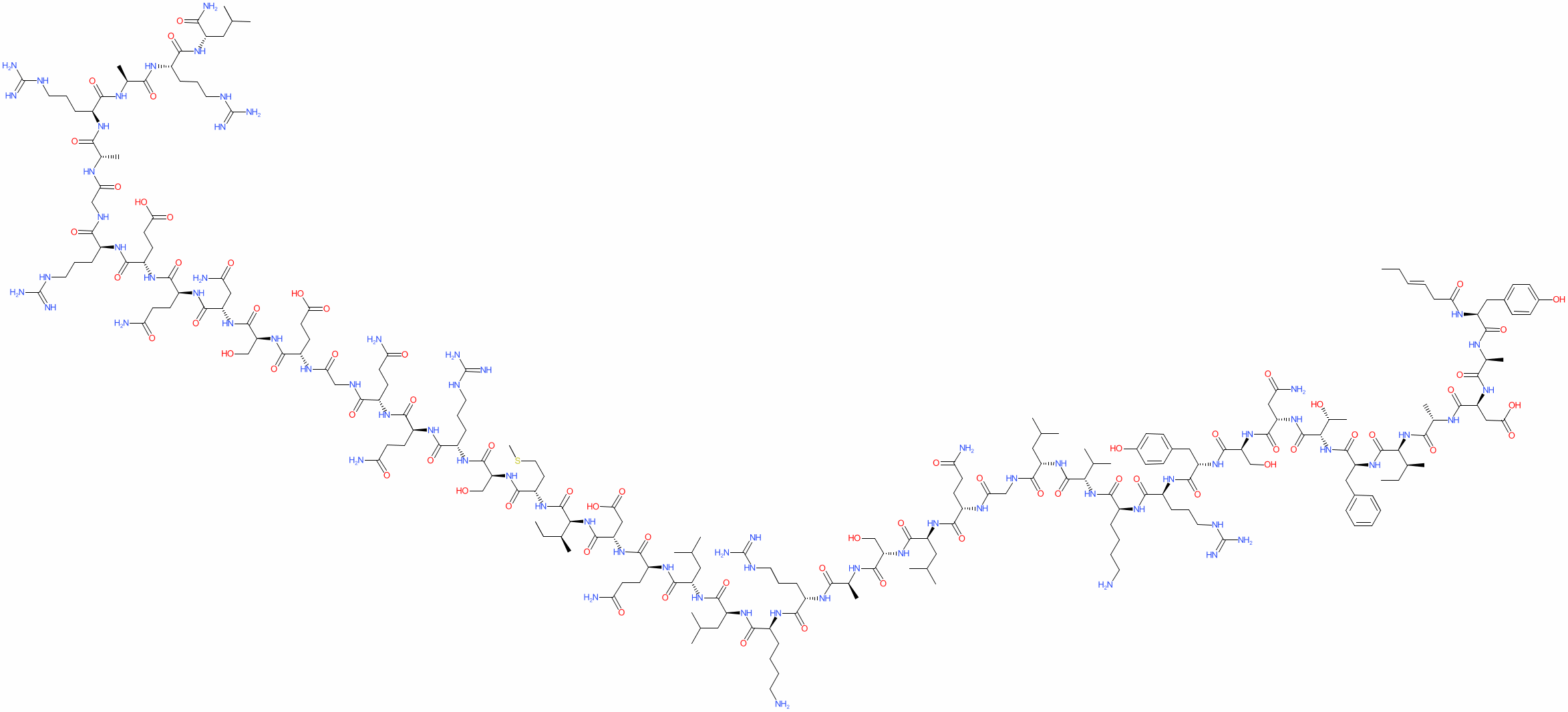
Sequence (as provided): Unk-Tyr-Ala-Asp-Ala-Ile-Phe-Thr-Asn-Ser-Tyr-Arg-Lys-Val-Leu-Gly-Gln-Leu-Ser-Ala-Arg-Lys-Leu-Leu-Gln-Asp-Ile-Met-Ser-Arg-Gln-Gln-Gly-Glu-Ser-Asn-Gln-Glu-Arg-Gly-Ala-Arg-Ala-Arg-Leu
Molecular Formula: C223H370N72O69S
Molecular Weight: 5195.908 g/mol
PubChem CID: 44147413
CAS Number: 901758-09-6
Tesamorelin is engineered as a GHRH-family peptide analogue to support reproducible handling and exposure profiles in experimental workflows. In laboratory studies, such modifications may be leveraged to evaluate stability-sensitive endpoints, ligand–receptor interaction consistency, and dose–response behavior within defined assay conditions.
Research Applications
As a GHRH analogue, tesamorelin is used in laboratory research to probe GHRHR activation and downstream signaling associated with GH/IGF-axis regulation. In experimental contexts, GHRHR engagement is commonly associated with GPCR-mediated signaling (often Gs/cAMP-linked), modulation of kinase activity, and transcriptional programs that influence endocrine signaling dynamics.
Common RUO applications (non-exhaustive) include:
- GHRHR pharmacology: ligand binding, potency, and receptor-activation assays
- Second-messenger studies: adenylate cyclase/cAMP-linked signaling readouts and downstream transcriptional responses
- GH/IGF-axis pathway mapping in controlled in-vitro systems and in-vivo animal models
- Endocrine feedback and signaling kinetics experiments (including receptor desensitization concepts)
- Exploratory biomarker workflows in metabolic and neuroendocrine research models
The trans-3-hexanoic acid modification is used in peptide engineering to support consistent experimental performance and facilitate mechanistic interrogation of receptor signaling and feedback regulation under controlled laboratory conditions.
Pathway / Mechanistic Context
Tesamorelin is studied as a GHRH-pathway probe that signals through the growth hormone–releasing hormone receptor (GHRHR), a class B G protein–coupled receptor. In canonical models, receptor engagement is associated with adenylate cyclase activation and increased intracellular cAMP, supporting downstream phosphorylation events and regulated gene-expression programs relevant to somatotroph and endocrine-axis function.
In research systems, downstream signaling may be evaluated via endocrine readouts, transcriptional signatures, kinase-node cross-talk, and biomarker relationships tied to GH/IGF-axis regulation and metabolic or neuroendocrine endpoints.
Preclinical Research Summary
1. Experimental Modeling of Visceral Adiposity & Lipid Biomarkers
Published studies have evaluated tesamorelin and related growth hormone–releasing factor analogues in research cohorts using metabolic endpoints and biomarker readouts. Reported analyses include associations between changes in visceral adipose tissue measures and lipid parameters such as triglycerides [3], [4]. These citations are provided strictly for scientific background and do not imply any intended medical, diagnostic, or therapeutic use.
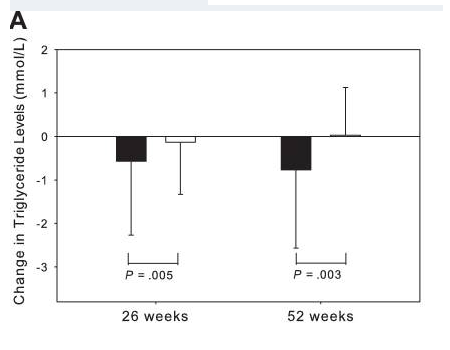
Figure included as an educational reference to the cited publication record.
Source: PubMed
2. Endocrine Axis Research in Chronic Infection Models
Reviews and mechanistic discussions have described endocrine and metabolic alterations observed in chronic infection research settings, including reported changes in growth hormone axis parameters [5]. In RUO laboratories, tesamorelin may be used as a receptor-directed probe to evaluate signaling relationships and endocrine feedback behavior under controlled experimental conditions.
3. Peripheral Nerve Biology & Growth Hormone Axis Augmentation (Preclinical Context)
The growth hormone axis has been discussed in preclinical literature as a modulator of cellular environments relevant to peripheral nerve injury models and regenerative biology research. Reviews have summarized potential mechanistic links between endocrine signaling and experimental outcomes in nerve repair paradigms [6]. These discussions support hypothesis generation for mechanistic studies (e.g., growth factor signaling, Schwann cell-associated pathways, and axonal outgrowth processes) in non-clinical settings.
4. Neuroendocrine Signaling & Biomarker Readouts in Cognitive Research
GHRH analogues have been evaluated in published research using biomarker and neurochemical readouts, including spectroscopy-associated measures and neurotransmitter-related endpoints, as part of broader investigations into neuroendocrine signaling in aging models [7]. References are provided for pathway context only.
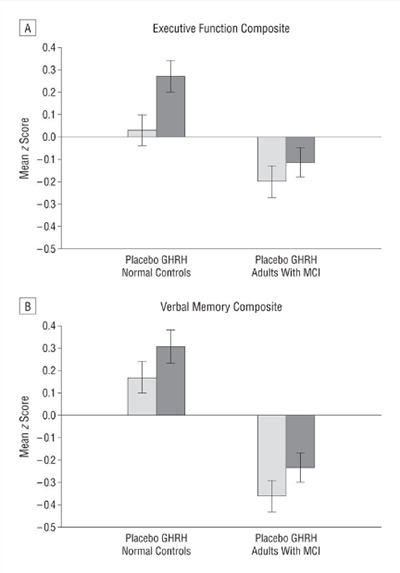
Figure included as an educational reference to the cited publication record.
Source: PubMed
All research summaries above reflect preclinical, translational, and laboratory observations and are provided solely to support experimental planning and mechanistic discussion.
Form & Analytical Testing
Tesamorelin supplied for research is commonly prepared as a synthetic peptide suitable for laboratory handling. Product identity and purity are typically verified using established analytical techniques such as high-performance liquid chromatography (HPLC) and mass spectrometry (MS). Batch-specific documentation may be provided to support research reproducibility and quality review.
Materials are intended to support controlled experimental workflows and downstream characterization using standard laboratory assays.
Referenced Citations
- Clinical Review Report: Tesamorelin (Egrifta). Ottawa (ON): Canadian Agency for Drugs and Technologies in Health, 2016.
- A. Mangili, J. Falutz, J.-C. Mamputu, M. Stepanians, and B. Hayward, “Predictors of Treatment Response to Tesamorelin, a Growth Hormone-Releasing Factor Analog, in HIV-Infected Patients with Excess Abdominal Fat,” PloS One, vol. 10, no. 10, p. e0140358, 2015. [PubMed]
- J. Falutz et al., “Metabolic effects of a growth hormone-releasing factor in patients with HIV,” N. Engl. J. Med., vol. 357, no. 23, pp. 2359–2370, Dec. 2007. [NEJM]
- T. L. Stanley et al., “Reduction in visceral adiposity is associated with an improved metabolic profile in HIV-infected patients receiving tesamorelin,” Clin. Infect. Dis., vol. 54, no. 11, pp. 1642–1651, Jun. 2012. [PubMed]
- V. Rochira and G. Guaraldi, “Growth hormone deficiency and human immunodeficiency virus,” Best Pract. Res. Clin. Endocrinol. Metab., vol. 31, no. 1, pp. 91–111, 2017. [PubMed]
- S. H. Tuffaha et al., “Therapeutic augmentation of the growth hormone axis to improve outcomes following peripheral nerve injury,” Expert Opin. Ther. Targets, vol. 20, no. 10, pp. 1259–1265, Oct. 2016. [PubMed]
- S. D. Friedman et al., “Growth hormone-releasing hormone effects on brain γ-aminobutyric acid levels in mild cognitive impairment and healthy aging,” JAMA Neurol., vol. 70, no. 7, pp. 883–890, Jul. 2013. [PubMed]
ALL ARTICLES AND PRODUCT INFORMATION PROVIDED ON THIS WEBSITE ARE FOR INFORMATONAL AND EDUCATIONAL PURPOSES ONLY.
RUO Disclaimer
The products offered on this website are furnished for in-vitro studies only. In-vitro studies (Latin: in glass) are performed outside of the body. These products are not medicines or drugs and have not been approved by the FDA to prevent, treat or cure any medical condition, ailment or disease. Bodily introduction of any kind into humans or animals is strictly forbidden by law.
For Laboratory Research Only. Not for human use, medical use, diagnostic use, or veterinary use.
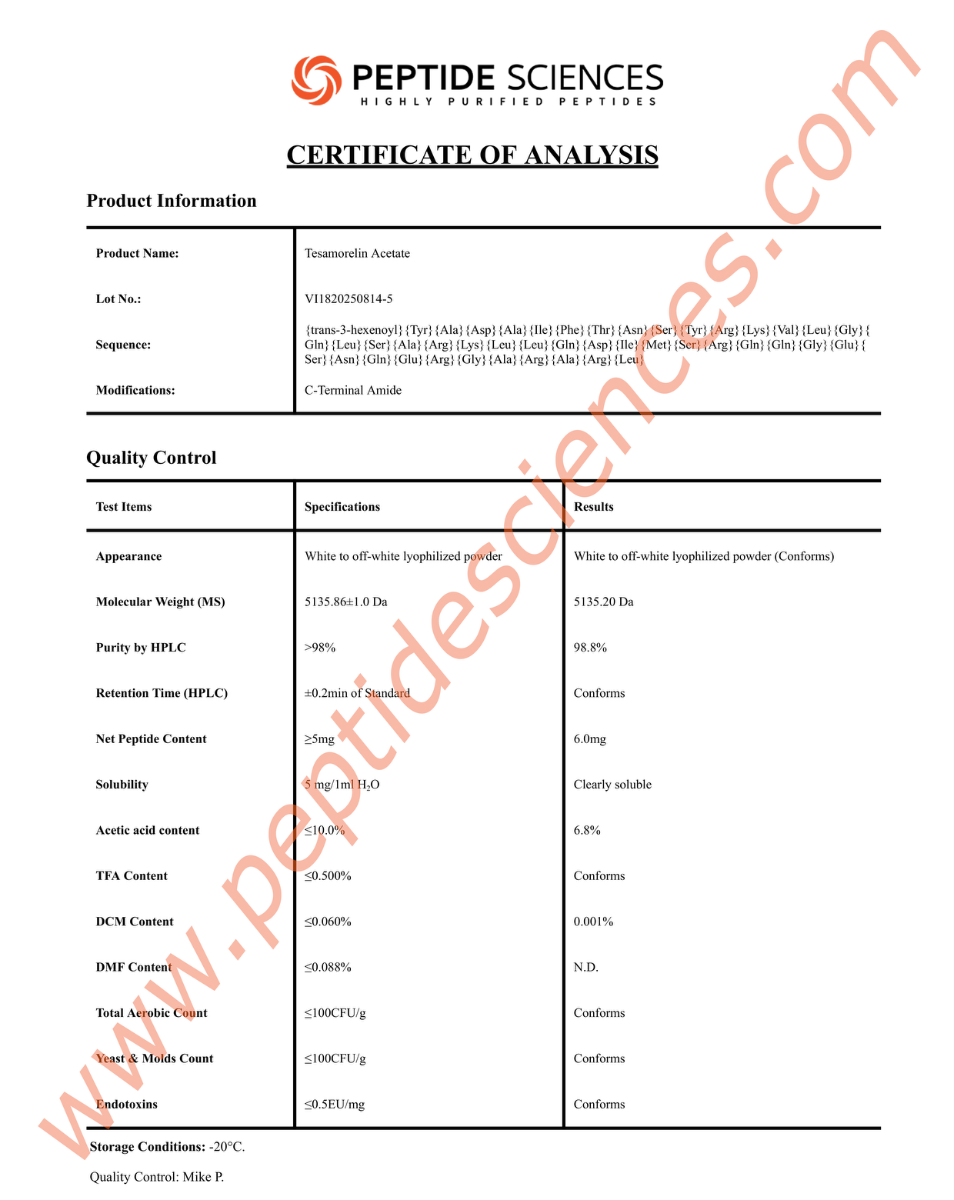
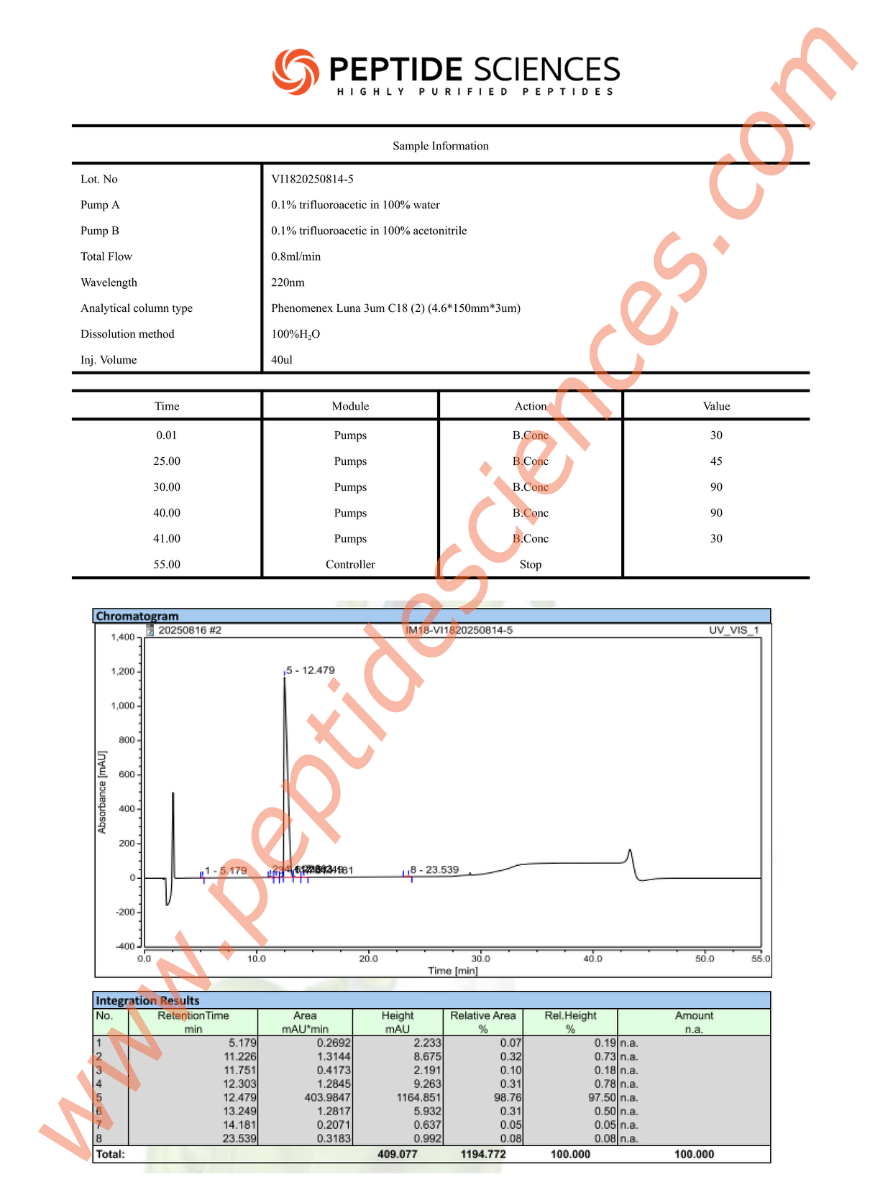
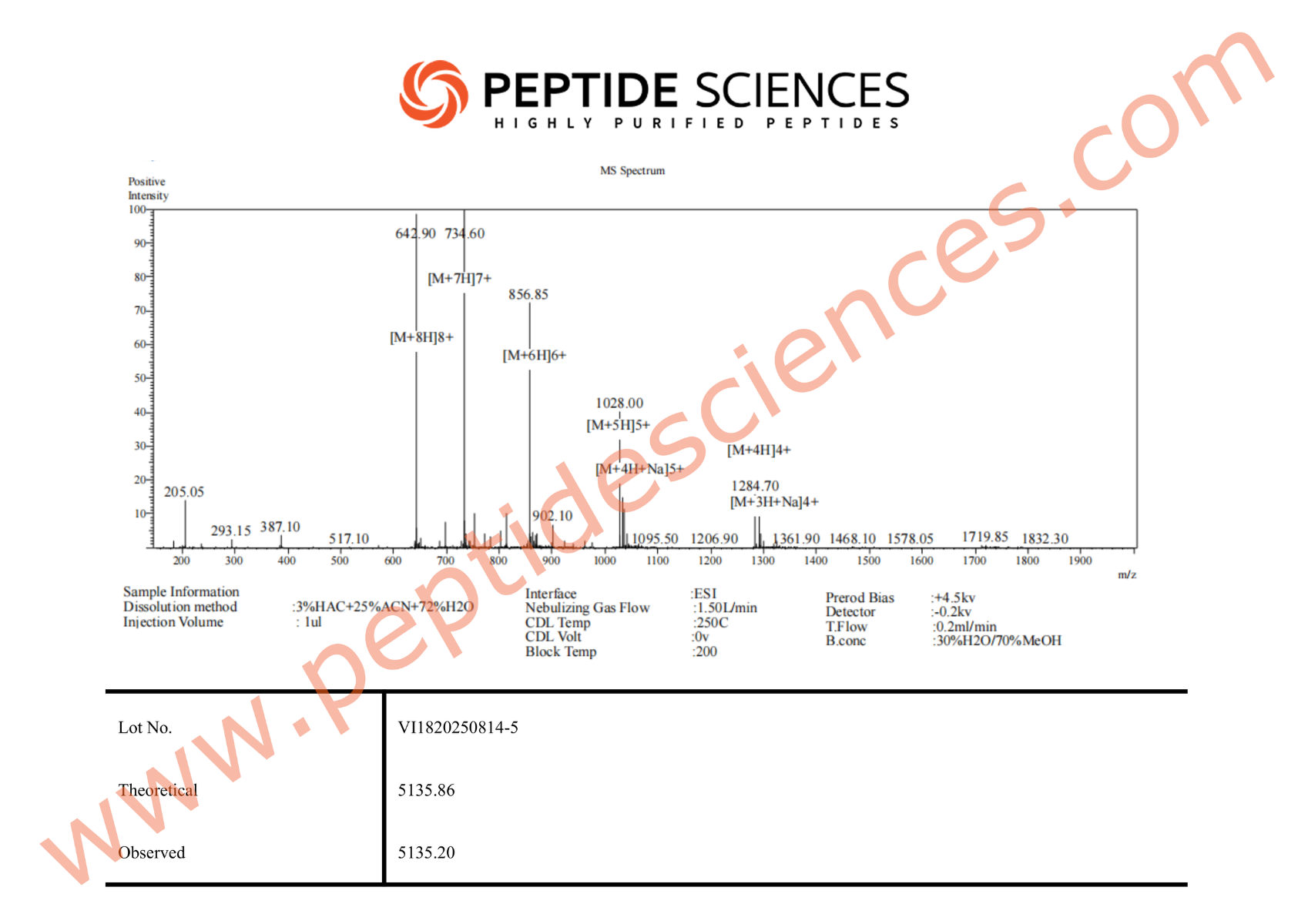

Storage Instructions:
All of our products are manufactured using the Lyophilization (Freeze Drying) process, which ensures that our products remain 100% stable for shipping for up to 3-4 months.
Once the peptides are reconstituted (mixed with bacteriostatic water), they must be stored in the fridge to maintain stability. After reconstitution, the peptides will remain stable for up to 30 days.
Lyophilization is a unique dehydration process, also known as cryodesiccation, where the peptides are frozen and then subjected to low pressure. This causes the water in the peptide vial to sublimate directly from solid to gas, leaving behind a stable, crystalline white structure known as lyophilized peptide. The puffy white powder can be stored at room temperature until you’re ready to reconstitute it with bacteriostatic water.
Once peptides have been received, it is imperative that they are kept cold and away from light. If the peptides will be used immediately, or in the next several days, weeks or months, short-term refrigeration under 4C (39F) is generally acceptable. Lyophilized peptides are usually stable at room temperatures for several weeks or more, so if they will be utilized within weeks or months such storage is typically adequate.
However, for longer term storage (several months to years) it is more preferable to store peptides in a freezer at -80C (-112F). When storing peptides for months or even years, freezing is optimal in order to preserve the peptide’s stability.
Why Choose Our Tesamorelin 5mg?
When you are looking for Tesamorelin 5mg for sale, quality is paramount.
Our products undergo rigorous testing to ensure they meet the strict requirements of laboratory environments.
By choosing to buy Tesamorelin 5mg from our store, you are guaranteed a product that is:
- High Purity (Tested for 99%+)
- Fast Shipping – Always in stock
- Secure Packaging for Research Integrity
- Competitive Pricing for Bulk Orders
Specifications & Technical Data
| Feature | Specification |
|---|---|
| Product Name | Tesamorelin 5mg |
| SKU | 138 |
| Purity | >99% |
| Form | Research Grade Compound |
| Availability | In Stock / For Sale |
Scientific Research & Clinical Applications
The research surrounding Tesamorelin 5mg is vast. Scientists explore its potential in various metabolic and physiological models.
For more detailed scientific data, you can visit PubMed
to review the latest peer-reviewed literature regarding this compound.
Frequently Asked Questions
Where can I buy Tesamorelin 5mg?
You can buy Tesamorelin 5mg directly from our website. We provide a secure checkout and fast shipping to ensure your research stays on track.
Is Tesamorelin 5mg in stock?
Yes, we currently have Tesamorelin 5mg in stock. Orders are typically processed within 24 hours to ensure rapid delivery to your laboratory.
Related Research Products
If you are interested in Tesamorelin 5mg, you may also want to explore these related products currently in stock:
Disclaimer: All products listed are for research purposes only. Not for human consumption.
Related products
All Peptides
All Peptides

All Peptides

All Peptides

All Peptides

All Peptides

All Peptides

All Peptides