

Methylene Blue (10mg x 60 Capsules = 600mg)
$110.00
Methylene Blue is a phenothiazine-derived research compound widely utilized in studies of mitochondrial function, redox biology, and cellular respiration. It acts as an alternative electron carrier in the mitochondrial electron transport chain, facilitating NADH oxidation and ATP production under stress conditions. Methylene Blue is used in preclinical research investigating oxidative metabolism, neuroenergetic regulation, and redox-mediated signaling mechanisms.
References:
Atamna H et al., Proc Natl Acad Sci USA, 2008 105(32): 9775–9780
Rojas JC et al., Neurobiol Dis, 2012 45(3): 938–948
Callaway NL et al., J Neurosci, 2004 24(17): 4181–4188
These capsules are provided exclusively as inert containers for the dry transport, storage, and handling of laboratory research materials. They are not dosage forms and are not intended for ingestion or administration. They must not be used as drug delivery systems, consumed, or administered in any form. For Research Use Only: Not for use in humans or animals. Not for diagnostic or therapeutic purposes.
Methylene Blue (10mg x 60 Capsules = 600mg) – Buy High-Quality Methylene Blue (10mg x 60 Capsules = 600mg) Online
Looking to buy Methylene Blue (10mg x 60 Capsules = 600mg) for your research laboratory? You have come to the right place.
We currently have Methylene Blue (10mg x 60 Capsules = 600mg) for sale and it is in stock and ready for immediate shipping.
Our Methylene Blue (10mg x 60 Capsules = 600mg) is of the highest purity, making it the best Methylene Blue (10mg x 60 Capsules = 600mg) online for scientific studies.
Product Overview
Methylene Blue (10mg x 60 Capsules = 600mg) is a premium research compound widely utilized in various scientific studies.
Researchers seeking to buy Methylene Blue (10mg x 60 Capsules = 600mg) online often prioritize purity and consistency.
This compound has been studied extensively for its unique biochemical properties and its role in cellular pathways.
Overview
Methylene Blue, chemically designated as methylthioninium chloride, is a synthetic thiazine dye extensively utilized as a redox-active probe in biochemical, cellular, and molecular research systems. Its physicochemical properties enable reversible electron transfer, making it a widely studied compound in investigations involving mitochondrial electron transport, oxidative–reductive balance, and intracellular redox cycling.
In laboratory research contexts, methylene blue has been employed as a staining reagent, redox indicator, and experimental modulator of mitochondrial bioenergetics. Contemporary preclinical research has expanded its use into experimental models examining mitochondrial signaling, oxidative stress regulation, and intracellular energy dynamics under controlled in-vitro and in-vivo animal conditions.
Biochemical Characteristics
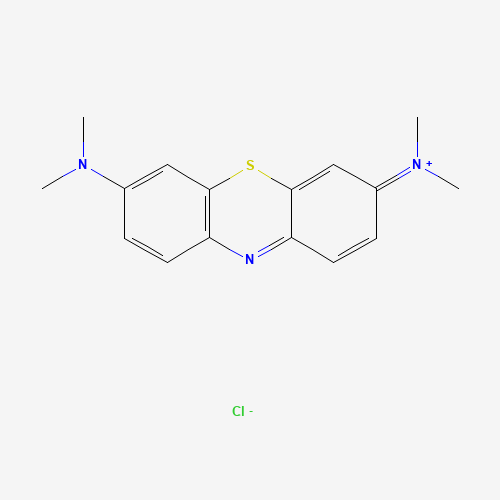
Source: PubChem
Molecular Formula: C16H18ClN3S
Molecular Weight: 319.85 g/mol
PubChem CID: 6099
CAS Number: 61-73-4
Synonyms: Methylthioninium chloride, Basic Blue 9, Solvent Blue 8
Methylene blue functions as a reversible redox-active compound capable of accepting and donating electrons within biological systems. Its redox cycling between oxidized methylene blue and reduced leucomethylene blue allows participation in electron transport processes independent of oxygen availability.
In experimental systems, methylene blue has been shown to interact with mitochondrial electron transport chain components, influence redox-sensitive enzymes, and modulate intracellular reactive oxygen and nitrogen species generation. These biochemical properties make it a frequently used tool in studies of mitochondrial efficiency, oxidative stress modeling, and cellular energy metabolism.
Research Applications
In laboratory research environments, methylene blue has been utilized across a range of experimental platforms including cell culture systems, isolated mitochondrial preparations, and animal models designed to examine bioenergetic and redox-related processes.
- Experimental modeling of mitochondrial electron transport dynamics
- Investigation of oxidative and nitrosative stress pathways
- Analysis of redox-sensitive signaling cascades
- Photodynamic research models involving light-activated redox reactions
- Use as a histological and cellular staining reagent
Pathway / Mechanistic Context
Mechanistic studies describe methylene blue as an alternative electron carrier capable of interacting with mitochondrial complexes I–IV. By serving as a redox shuttle, it has been observed to influence electron flow efficiency and reduce electron leakage that contributes to reactive oxygen species generation.
Additional experimental observations describe interactions with nitric oxide–related signaling, monoamine oxidase activity, and redox-sensitive apoptotic pathways. All mechanistic descriptions remain confined to biochemical and molecular observations in controlled research models.
Preclinical Research Summary
Preclinical publications report observations of methylene blue in in-vitro systems and animal models examining mitochondrial efficiency, oxidative stress modulation, cellular survival markers, and photodynamic responses.
These studies describe correlations between redox modulation and cellular energy parameters without extending conclusions beyond experimental research conditions. No clinical or translational claims are implied.
Form & Analytical Testing
Methylene blue is supplied as a research-grade chemical material. Identity and purity are typically characterized using spectroscopic, chromatographic, and mass-based analytical techniques appropriate for laboratory reagents.
Referenced Citations
-
M. Bužga et al., “Methylene blue: a controversial diagnostic acid and medication?,” Toxicol Res (Camb), vol. 11, no. 5, pp. 711–717, Aug. 2022, doi: 10.1093/toxres/tfac050.
-
S. Srivastava, “The Mitochondrial Basis of Aging and Age-Related Disorders,” Genes (Basel), vol. 8, no. 12, p. 398, Dec. 2017, doi: 10.3390/genes8120398.
-
D. Tucker, Y. Lu, and Q. Zhang, “From Mitochondrial Function to Neuroprotection – An Emerging Role for Methylene Blue,” Mol Neurobiol, vol. 55, no. 6, pp. 5137–5153, Jun. 2018, doi: 10.1007/s12035-017-0712-2.
-
A. P. Gureev, I. S. Sadovnikova, and V. N. Popov, “Molecular Mechanisms of the Neuroprotective Effect of Methylene Blue,” Biochemistry (Mosc), vol. 87, no. 9, pp. 940–956, Sep. 2022, doi: 10.1134/S0006297922090073.
-
T. Mori et al., “Methylene Blue Modulates β-Secretase, Reverses Cerebral Amyloidosis, and Improves Cognition in Transgenic Mice,” J Biol Chem, vol. 289, no. 44, pp. 30303–30317, Oct. 2014, doi: 10.1074/jbc.M114.568212.
-
Y. Liu et al., “Customized Intranasal Hydrogel Delivering Methylene Blue Ameliorates Cognitive Dysfunction against Alzheimer’s Disease,” Adv Mater, vol. 36, no. 19, p. e2307081, May 2024, doi: 10.1002/adma.202307081.
-
M. Aimir, A. Nasser, J. Rokayah, M. Hardin, and M. Sohail, “The sensitivity and specificity of methylene blue dye as a single agent in sentinel lymph node biopsy for early breast cancer,” Med J Malaysia, vol. 77, no. 5, pp. 552–557, Sep. 2022.
-
A. F. dos Santos et al., “Methylene blue photodynamic therapy induces selective and massive cell death in human breast cancer cells,” BMC Cancer, vol. 17, p. 194, Mar. 2017, doi: 10.1186/s12885-017-3179-7.
-
R. F. Turchiello, C. S. Oliveira, A. U. Fernandes, S. L. Gómez, and M. S. Baptista, “Methylene blue-mediated Photodynamic Therapy in human retinoblastoma cell lines,” J Photochem Photobiol B, vol. 222, p. 112260, Sep. 2021, doi: 10.1016/j.jphotobiol.2021.112260.
-
H. Xue, A. Thaivalappil, and K. Cao, “The Potentials of Methylene Blue as an Anti-Aging Drug,” Cells, vol. 10, no. 12, p. 3379, Dec. 2021, doi: 10.3390/cells10123379.
- M. E. Bauer and A. L. Teixeira, “Inflammation in psychiatric disorders: what comes first?,” Ann N Y Acad Sci, vol. 1437, no. 1, pp. 57–67, Feb. 2019, doi: 10.1111/nyas.13712.
-
M. J. Gandal et al., “GABAB-mediated rescue of altered excitatory-inhibitory balance, gamma synchrony and behavioral deficits following constitutive NMDAR-hypofunction,” Transl Psychiatry, vol. 2, no. 7, p. e142, Jul. 2012, doi: 10.1038/tp.2012.69.
-
M. Alda et al., “Methylene blue treatment for residual symptoms of bipolar disorder: randomised crossover study,” Br J Psychiatry, vol. 210, no. 1, pp. 54–60, Jan. 2017, doi: 10.1192/bjp.bp.115.173930.
- M. Alda, “Methylene Blue in the Treatment of Neuropsychiatric Disorders,” CNS Drugs, vol. 33, no. 8, pp. 719–725, Aug. 2019, doi: 10.1007/s40263-019-00641-3.
- L. Zhou, J. Flores, A. Noël, O. Beauchet, P. J. Sjöström, and A. C. LeBlanc, “Methylene blue inhibits Caspase-6 activity, and reverses Caspase-6-induced cognitive impairment and neuroinflammation in aged mice,” Acta Neuropathol Commun, vol. 7, p. 210, Dec. 2019, doi: 10.1186/s40478-019-0856-6.
ALL ARTICLES AND PRODUCT INFORMATION PROVIDED ON THIS WEBSITE ARE FOR INFORMATIONAL AND EDUCATIONAL PURPOSES ONLY.
RUO Disclaimer
The products offered on this website are furnished for in-vitro studies only. In-vitro studies (Latin: in glass) are performed outside of the body. These products are not medicines or drugs and have not been approved by the FDA to prevent, treat or cure any medical condition, ailment or disease. Bodily introduction of any kind into humans or animals is strictly forbidden by law.
For Laboratory Research Only. Not for human use, medical use, diagnostic use, or veterinary use.
Why Choose Our Methylene Blue (10mg x 60 Capsules = 600mg)?
When you are looking for Methylene Blue (10mg x 60 Capsules = 600mg) for sale, quality is paramount.
Our products undergo rigorous testing to ensure they meet the strict requirements of laboratory environments.
By choosing to buy Methylene Blue (10mg x 60 Capsules = 600mg) from our store, you are guaranteed a product that is:
- High Purity (Tested for 99%+)
- Fast Shipping – Always in stock
- Secure Packaging for Research Integrity
- Competitive Pricing for Bulk Orders
Specifications & Technical Data
| Feature | Specification |
|---|---|
| Product Name | Methylene Blue (10mg x 60 Capsules = 600mg) |
| SKU | 84 |
| Purity | >99% |
| Form | Research Grade Compound |
| Availability | In Stock / For Sale |
Scientific Research & Clinical Applications
The research surrounding Methylene Blue (10mg x 60 Capsules = 600mg) is vast. Scientists explore its potential in various metabolic and physiological models.
For more detailed scientific data, you can visit PubMed
to review the latest peer-reviewed literature regarding this compound.
Frequently Asked Questions
Where can I buy Methylene Blue (10mg x 60 Capsules = 600mg)?
You can buy Methylene Blue (10mg x 60 Capsules = 600mg) directly from our website. We provide a secure checkout and fast shipping to ensure your research stays on track.
Is Methylene Blue (10mg x 60 Capsules = 600mg) in stock?
Yes, we currently have Methylene Blue (10mg x 60 Capsules = 600mg) in stock. Orders are typically processed within 24 hours to ensure rapid delivery to your laboratory.
Related Research Products
If you are interested in Methylene Blue (10mg x 60 Capsules = 600mg), you may also want to explore these related products currently in stock:
Disclaimer: All products listed are for research purposes only. Not for human consumption.
Related products

All Peptides

All Peptides
All Peptides

All Peptides

All Peptides

All Peptides

All Peptides
All Peptides