
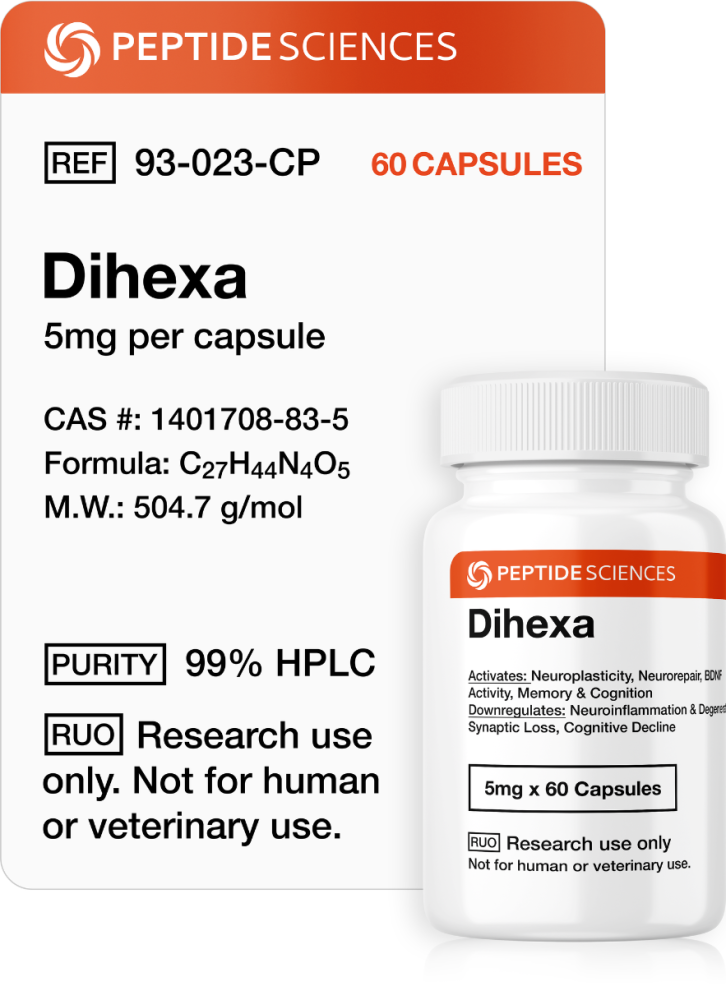
Dihexa (5mg x 60 Capsules = 300mg)

$195.00
Dihexa is a synthetic research peptide (N-hexanoic-Tyr-Ile-(6)-aminohexanoic amide) identified as a hepatocyte growth factor (HGF) mimetic. It enhances c-Met receptor signaling, promoting synaptogenesis and neuronal plasticity in experimental models. Dihexa’s mechanism involves upregulation of BDNF-like pathways and stabilization of dendritic spine density, making it a valuable compound for neuroregeneration and cognitive signaling studies.
References:
Benoist CC et al., J Pharmacol Exp Ther, 2014;351(2):390–402
Wright JW et al., J Alzheimers Dis, 2015;45(4):985–1000
Sun X et al., Brain Sci, 2021;11(11):1487
These capsules are provided exclusively as inert containers for the dry transport, storage, and handling of laboratory research materials. They are not dosage forms and are not intended for ingestion or administration. They must not be used as drug delivery systems, consumed, or administered in any form. For Research Use Only: Not for use in humans or animals. Not for diagnostic or therapeutic purposes.
Dihexa (5mg x 60 Capsules = 300mg) – Buy High-Quality Dihexa (5mg x 60 Capsules = 300mg) Online
Looking to buy Dihexa (5mg x 60 Capsules = 300mg) for your research laboratory? You have come to the right place.
We currently have Dihexa (5mg x 60 Capsules = 300mg) for sale and it is in stock and ready for immediate shipping.
Our Dihexa (5mg x 60 Capsules = 300mg) is of the highest purity, making it the best Dihexa (5mg x 60 Capsules = 300mg) online for scientific studies.
Product Overview
Dihexa (5mg x 60 Capsules = 300mg) is a premium research compound widely utilized in various scientific studies.
Researchers seeking to buy Dihexa (5mg x 60 Capsules = 300mg) online often prioritize purity and consistency.
This compound has been studied extensively for its unique biochemical properties and its role in cellular pathways.
Overview
Dihexa (also reported as PNB-0408; fosgonimeto) is a chemically defined angiotensin IV–derived oligopeptide analogue that has been described in preclinical literature. It is supplied exclusively as a laboratory research material and has been reported in non-clinical studies examining ligand–receptor binding interactions and intracellular signaling events associated with the hepatocyte growth factor (HGF) / c-Met receptor system.
Published descriptions of Dihexa are limited to experimental contexts in which molecular interactions, signaling components, and pathway-associated markers were evaluated under controlled laboratory conditions. All references to Dihexa are confined to descriptive and mechanistic observations within defined in-vitro and non-clinical in-vivo model systems.
No statements regarding outcomes, performance characteristics, or applicability beyond laboratory research contexts are made.
Biochemical Characteristics
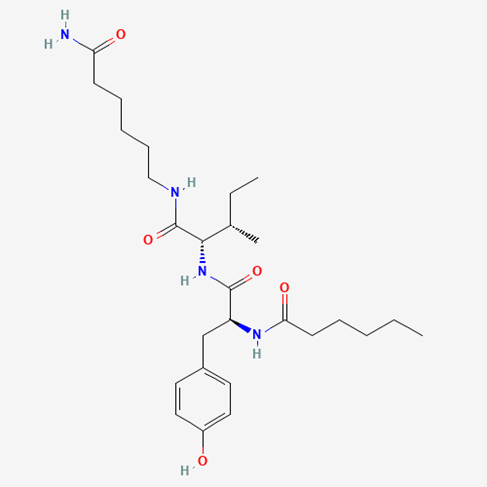
Source: PubChem
Amino Acid Sequence: Hexanoyl-Tyr-Ile-Unk (N-Hexanoyl-L-tyrosyl-N-(6-amino-6-oxohexyl)-L-isoleucinamide)
Molecular Formula: C27H44N4O5
Molecular Weight: 504.7 g/mol
PubChem CID: 129010512
CAS Number: 1401708-83-5
Reported Synonyms: N-hexanoic-Tyr-Ile-(6) aminohexanoic amide, PNB-0408, fosgonimeto
Dihexa is an N-terminally acylated peptide analogue structurally derived from angiotensin IV. Structural descriptions in the literature note the presence of an N-hexanoyl modification, which has been referenced in discussions of peptide physicochemical properties in experimental contexts.
All biochemical descriptions are limited to compositional and structural attributes reported in non-clinical research sources.
Research Applications
In the scientific literature, Dihexa has been referenced in non-clinical research settings involving cellular assays, ex-vivo preparations, and animal model studies. These references describe experimental contexts in which molecular interactions, signaling components, and pathway-associated markers were observed and recorded.
Research contexts reported include examination of:
- HGF/c-Met receptor-associated signaling components
- Angiotensin IV (AT4)-related molecular interactions
- Insulin-regulated aminopeptidase (IRAP)-associated biology
- Intracellular signaling cascade components
- Extracellular matrix–associated molecular markers
All reported applications remain confined to descriptive investigation within controlled laboratory research environments.
Pathway / Mechanistic Context
Mechanistic discussions in preclinical publications describe Dihexa in relation to the hepatocyte growth factor (HGF) / c-Met receptor system, a receptor tyrosine kinase complex associated with intracellular signaling cascades such as PI3K/AKT and MAPK-related pathways.
Additional references discuss angiotensin IV–associated signaling alongside insulin-regulated aminopeptidase (IRAP), a transmembrane aminopeptidase reported in studies of peptide processing, endosomal trafficking, and compartmentalized signaling.
These pathway descriptions are limited to molecular and biochemical observations reported in experimental research settings and do not imply functional outcomes.
Preclinical Research Summary
Preclinical studies referenced in the scientific literature describe observations involving Dihexa and related angiotensin IV analogues in cellular and non-clinical animal models. Reported observations include measurement of signaling-associated proteins, pathway-linked molecular markers, and morphology-related features documented under defined experimental conditions.
Separate rodent studies have reported experimental observations involving Dihexa within study-specific protocols, including histological and biochemical assessments. All reported findings are restricted to the experimental systems employed and do not extend beyond laboratory research contexts.
Form & Analytical Testing
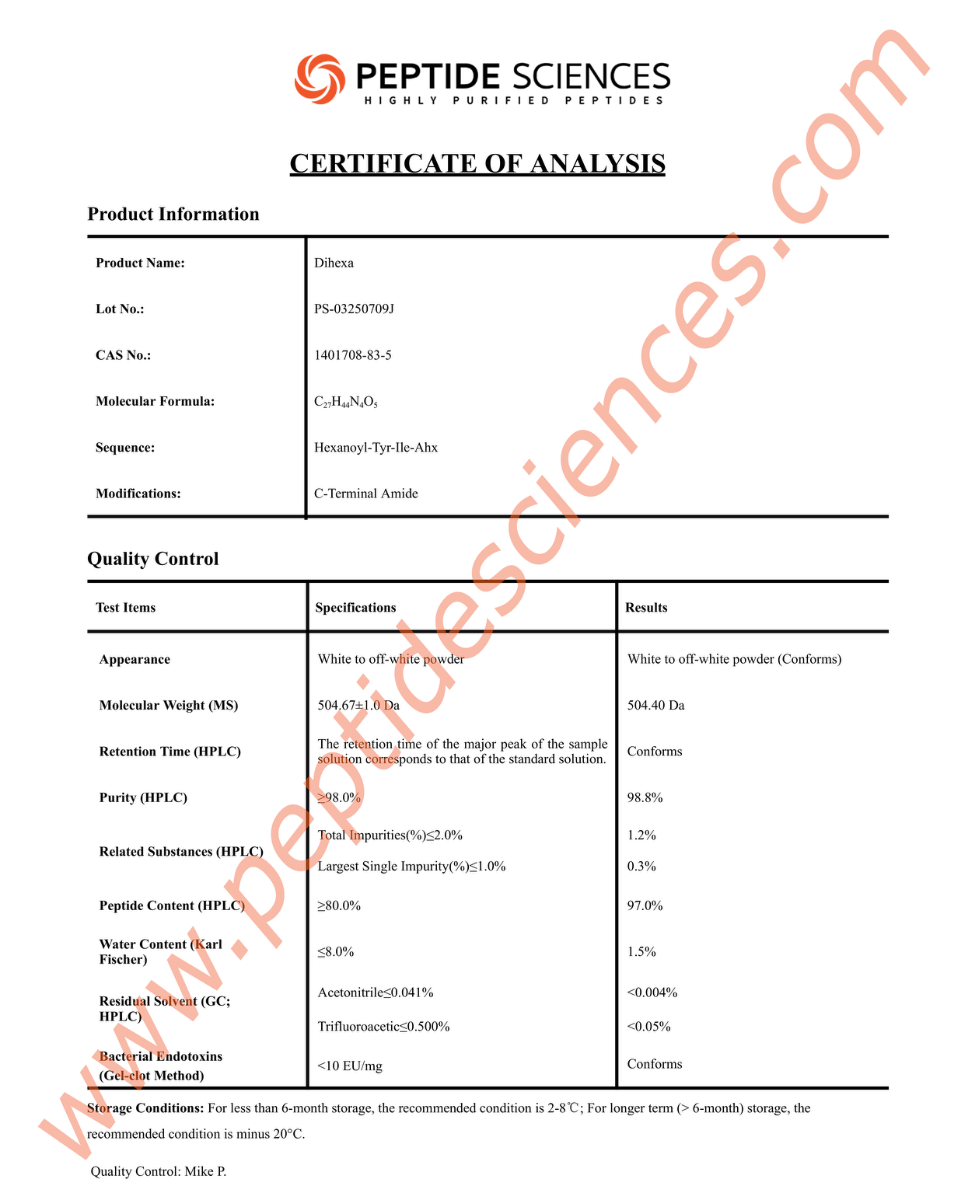
Dihexa is supplied as a research-grade peptide material. Identity and composition have been reported as verified using analytical techniques commonly applied to RUO materials, including high-performance liquid chromatography (HPLC) and mass spectrometry (MS).
Handling, storage, and analytical verification parameters are determined by individual laboratories in accordance with internal research protocols.
About The Author
The above literature was researched, edited, and organized by Dr. Logan, M.D. Dr. Logan holds a doctorate degree from Case Western Reserve University School of Medicine and a B.S. in molecular biology.
Scientific Journal Author
John Wright, Ph.D. is a professor of psychology who teaches courses including Research Design, Teaching Psychology, and Physiological Psychology. His research interests include Alzheimer’s disease, Parkinson’s disease, stroke-related motor dysfunctions, and the neurochemistry of memory consolidation. Dr. Wright has published extensively on these topics, with notable contributions addressing the role of matrix metalloproteinases and cell adhesion molecules in learning and addiction, the neurochemical basis of nicotine-induced behaviors, and the development of multi-target-directed ligands for the treatment of Alzheimer’s disease. He has also authored invited chapters and reviews on the brain renin-angiotensin system and therapeutic approaches for central nervous system disorders..
Dr. Wright. is referenced as one of the leading scientists involved in the research and development of Dihexa. In no way is this doctor/scientist endorsing or advocating the purchase, sale, or use of this product for any reason. There is no affiliation or relationship, implied or otherwise, between Peptide Sciences and this doctor. The purpose of citing the doctor is to acknowledge, recognize, and credit the exhaustive research and development efforts conducted by the scientists studying this peptide. Dr.Wright is listed in [3] under the referenced citations.
Referenced Citations
-
“Prospective Alzheimer’s drug builds new brain cell connections, improves cognitive function of rats,” ScienceDaily. Accessed: May 27, 2025. [Online]. Available: https://www.sciencedaily.com/releases/2012/10/121011090653.htm
-
H.-G. Bernstein et al., “Insulin-regulated aminopeptidase immunoreactivity is abundantly present in human hypothalamus and posterior pituitary gland, with reduced expression in paraventricular and suprachiasmatic neurons in chronic schizophrenia,” Eur Arch Psychiatry Clin Neurosci, vol. 267, no. 5, pp. 427–443, Aug. 2017, doi: 10.1007/s00406-016-0757-7.
-
J. W. Wright, L. H. Kawas, and J. W. Harding, “The development of small molecule angiotensin IV analogs to treat Alzheimer’s and Parkinson’s diseases,” Prog Neurobiol, vol. 125, pp. 26–46, Feb. 2015, doi: 10.1016/j.pneurobio.2014.11.004.
-
L. Saveanu et al., “IRAP identifies an endosomal compartment required for MHC class I cross-presentation,” Science, vol. 325, no. 5937, pp. 213–217, Jul. 2009, doi: 10.1126/science.1172845.
-
M. Weimershaus et al., “Mast cell-mediated inflammation relies on insulin-regulated aminopeptidase controlling cytokine export from the Golgi,” J Allergy Clin Immunol, vol. 151, no. 6, pp. 1595-1608.e6, Jun. 2023, doi: 10.1016/j.jaci.2023.01.014.
-
C. Birchmeier and E. Gherardi, “Developmental roles of HGF/SF and its receptor, the c-Met tyrosine kinase,” Trends Cell Biol, vol. 8, no. 10, pp. 404–410, Oct. 1998, doi: 10.1016/s0962-8924(98)01359-2.
-
J. D. Rudie et al., “Autism-Associated Promoter Variant in MET Impacts Functional and Structural Brain Networks,” Neuron, vol. 75, no. 5, pp. 904–915, Sep. 2012, doi: 10.1016/j.neuron.2012.07.010.
-
J. W. Wright and J. W. Harding, “The Brain Hepatocyte Growth Factor/c-Met Receptor System: A New Target for the Treatment of Alzheimer’s Disease,” J Alzheimers Dis, vol. 45, no. 4, pp. 985–1000, 2015, doi: 10.3233/JAD-142814.
-
J. W. Wright and J. W. Harding, “The brain angiotensin system and extracellular matrix molecules in neural plasticity, learning, and memory,” Prog Neurobiol, vol. 72, no. 4, pp. 263–293, Mar. 2004, doi: 10.1016/j.pneurobio.2004.03.003.
-
X. Sun, Y. Deng, X. Fu, S. Wang, R. Duan, and Y. Zhang, “AngIV-Analog Dihexa Rescues Cognitive Impairment and Recovers Memory in the APP/PS1 Mouse via the PI3K/AKT Signaling Pathway,” Brain Sci, vol. 11, no. 11, p. 1487, Nov. 2021, doi: 10.3390/brainsci11111487.
- J. B. Weiss, C. J. Phillips, E. W. Malin, V. S. Gorantla, J. W. Harding, and S. K. Salgar, “Stem cell, Granulocyte-Colony Stimulating Factor and/or Dihexa to promote limb function recovery in a rat sciatic nerve damage-repair model: Experimental animal studies,” Ann Med Surg (Lond), vol. 71, p. 102917, Nov. 2021, doi: 10.1016/j.amsu.2021.102917.
-
R. Siller, S. Greenhough, E. Naumovska, and G. J. Sullivan, “Small-molecule-driven hepatocyte differentiation of human pluripotent stem cells,” Stem Cell Reports, vol. 4, no. 5, pp. 939–952, May 2015, doi: 10.1016/j.stemcr.2015.04.001.
-
C. C. Benoist, J. W. Wright, M. Zhu, S. M. Appleyard, G. A. Wayman, and J. W. Harding, “Facilitation of Hippocampal Synaptogenesis and Spatial Memory by C-Terminal Truncated Nle1-Angiotensin IV Analogs,” J Pharmacol Exp Ther, vol. 339, no. 1, pp. 35–44, Oct. 2011, doi: 10.1124/jpet.111.182220.
ALL ARTICLES AND PRODUCT INFORMATION PROVIDED ON THIS WEBSITE ARE FOR INFORMATIONAL AND EDUCATIONAL PURPOSES ONLY.
The products offered on this website are furnished for in-vitro studies only. In-vitro studies (Latin: in glass) are performed outside of the body. These products are not medicines or drugs and have not been approved by the FDA to prevent, treat or cure any medical condition, ailment or disease. Bodily introduction of any kind into humans or animals is strictly forbidden by law.
RUO Disclaimer
The products offered on this website are furnished for in-vitro studies only. In-vitro studies (Latin: in glass) are performed outside of the body. These products are not medicines or drugs and have not been approved by the FDA to prevent, treat, or cure any disease or condition. Bodily introduction of any kind into humans or animals is strictly forbidden by law.
For Laboratory Research Only. Not for human use, medical use, diagnostic use, or veterinary use.
Why Choose Our Dihexa (5mg x 60 Capsules = 300mg)?
When you are looking for Dihexa (5mg x 60 Capsules = 300mg) for sale, quality is paramount.
Our products undergo rigorous testing to ensure they meet the strict requirements of laboratory environments.
By choosing to buy Dihexa (5mg x 60 Capsules = 300mg) from our store, you are guaranteed a product that is:
- High Purity (Tested for 99%+)
- Fast Shipping – Always in stock
- Secure Packaging for Research Integrity
- Competitive Pricing for Bulk Orders
Specifications & Technical Data
| Feature | Specification |
|---|---|
| Product Name | Dihexa (5mg x 60 Capsules = 300mg) |
| SKU | 31 |
| Purity | >99% |
| Form | Research Grade Compound |
| Availability | In Stock / For Sale |
Scientific Research & Clinical Applications
The research surrounding Dihexa (5mg x 60 Capsules = 300mg) is vast. Scientists explore its potential in various metabolic and physiological models.
For more detailed scientific data, you can visit PubMed
to review the latest peer-reviewed literature regarding this compound.
Frequently Asked Questions
Where can I buy Dihexa (5mg x 60 Capsules = 300mg)?
You can buy Dihexa (5mg x 60 Capsules = 300mg) directly from our website. We provide a secure checkout and fast shipping to ensure your research stays on track.
Is Dihexa (5mg x 60 Capsules = 300mg) in stock?
Yes, we currently have Dihexa (5mg x 60 Capsules = 300mg) in stock. Orders are typically processed within 24 hours to ensure rapid delivery to your laboratory.
Related Research Products
If you are interested in Dihexa (5mg x 60 Capsules = 300mg), you may also want to explore these related products currently in stock:
Disclaimer: All products listed are for research purposes only. Not for human consumption.
Related products
All Peptides

All Peptides

All Peptides

All Peptides

All Peptides

All Peptides

All Peptides
All Peptides