
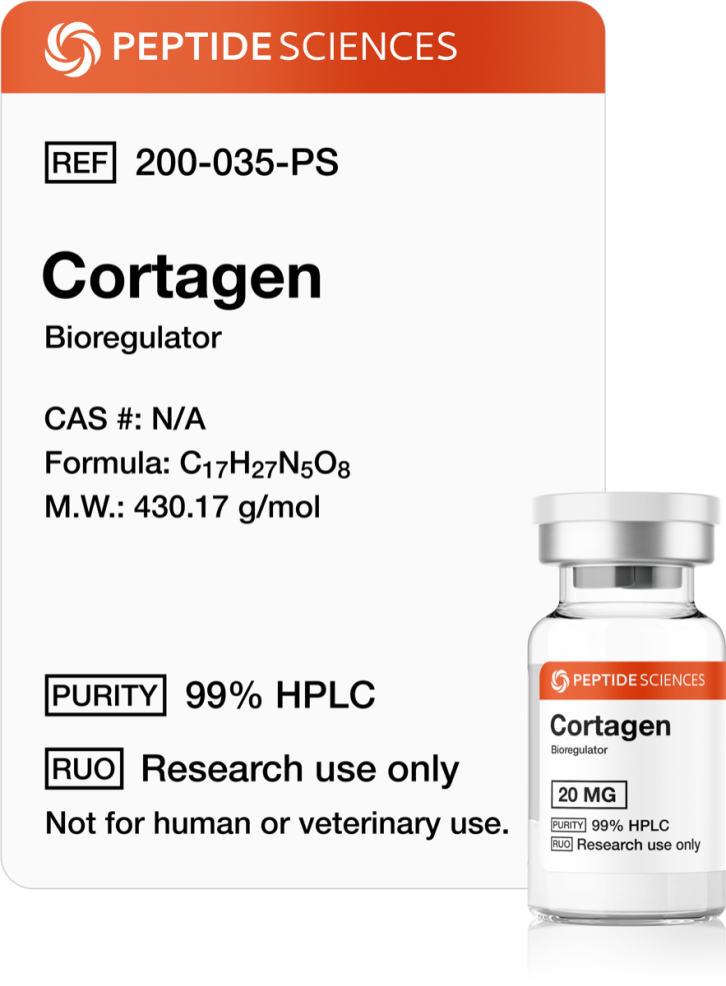
Cortagen 20mg (Bioregulator)
$65.00
Cortagen is a peptide bioregulator derived from cerebral cortex extracts studied for its role in neuroprotection and neural differentiation. It regulates neurotrophic signaling, gene transcription, and peptide-mediated synaptic stability. Cortagen is used in neurobiology research focusing on cognitive signaling, peptide neurogenomics, and brain cell metabolism.
For research use only. Not for human consumption.
References:
Khavinson VK et al., Neurochem J, 2006 142(1):76–79
Trofimova SV et al., Adv Gerontol, 2015 28(3):432–439
Sokolova IB et al., Bull Exp Biol Med, 2014;157(6):772–775
Cortagen 20mg (Bioregulator) – Buy High-Quality Cortagen 20mg (Bioregulator) Online
Looking to buy Cortagen 20mg (Bioregulator) for your research laboratory? You have come to the right place.
We currently have Cortagen 20mg (Bioregulator) for sale and it is in stock and ready for immediate shipping.
Our Cortagen 20mg (Bioregulator) is of the highest purity, making it the best Cortagen 20mg (Bioregulator) online for scientific studies.
Product Overview
Cortagen 20mg (Bioregulator) is a premium research compound widely utilized in various scientific studies.
Researchers seeking to buy Cortagen 20mg (Bioregulator) online often prioritize purity and consistency.
This compound has been studied extensively for its unique biochemical properties and its role in cellular pathways.
Overview
Cortagen (Ala-Glu-Asp-Pro; AEDP) is a short tetrapeptide described in the literature within the broader class of tissue-associated peptide bioregulators. In preclinical research, short peptides of this category are investigated for their capacity to modulate transcriptional programs and chromatin-associated regulation in a context-dependent manner. Reported experimental focus areas include central nervous system–associated cellular models, with additional mechanistic exploration in cardiac- and immune-related in-vitro systems. Studies commonly evaluate changes in gene expression profiles, oxidative stress–linked biochemical markers, and cytokine-associated signaling readouts under controlled laboratory conditions.
Biochemical Characteristics
Amino Acid Sequence: Ala-Glu-Asp-Pro (AEDP)
Molecular Formula: C17H27N5O8
Molecular Weight: 430.17 g/mol
PubChem CID: 18439621
Synonyms: SCHEMBL5491754
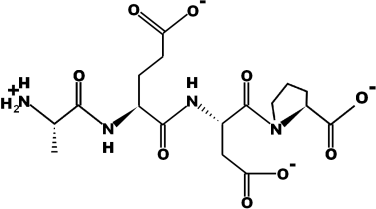
Source: PepDraw
Research Applications
Cortagen is supplied as a research reagent for laboratory investigations where short-peptide signaling and transcriptional regulation are of interest. Common RUO research applications include: (i) mechanistic studies of chromatin-associated transcriptional accessibility and gene-expression modulation in cellular systems; (ii) profiling experiments (e.g., microarray or transcriptomic workflows) to evaluate differential expression patterns across defined gene sets; (iii) oxidative stress and lipid peroxidation (LPO) assays in animal-derived tissue preparations or in-vivo study designs; and (iv) immune signaling experiments using in-vitro cultures (e.g., splenocyte-based assays) to evaluate cytokine-linked transcriptional responses under controlled conditions.
Pathway / Mechanistic Context
Published preclinical work on short peptide bioregulators frequently frames mechanism in terms of chromatin-state dynamics and transcription-factor accessibility. Within this conceptual model, experimentally observed shifts in gene expression are discussed alongside changes in chromatin compaction, nucleosome-level organization, and ribosome-associated transcriptional activity. For Cortagen, mechanistic investigations include profiling of gene-expression changes across multiple genomic loci in animal models, consistent with a systems-level modulation of transcriptional output rather than single-target receptor pharmacology.
In addition to transcriptional and chromatin-associated mechanisms, cited preclinical studies evaluate biochemical endpoints linked to oxidative processes. Lipid peroxidation (LPO) products are commonly used as experimental readouts for free-radical–mediated oxidation in lipid-rich tissues, including neural tissue. In this context, changes in LPO-associated markers are interpreted as shifts in oxidative-state balance within defined experimental paradigms.
The figure below is provided for reference as reproduced from the cited scientific literature.
Source: PubChem
This schematic is reproduced from the scientific literature and is provided solely for mechanistic context. It does not imply human use, diagnosis, or therapeutic application.
Preclinical Research Summary
The referenced literature includes rodent studies and in-vitro experiments evaluating Cortagen-associated changes in experimental endpoints relevant to neural tissue biology, peripheral nerve models, oxidative chemistry readouts, and immune signaling assays. Reported designs include peripheral nerve transection paradigms in rats where regeneration-related histological or morphometric endpoints are quantified under controlled conditions, as well as transcriptome profiling experiments assessing differential expression across sets of known genes in animal tissues. Additional studies evaluate free-radical–linked biochemical markers (including LPO products) and related oxidative-state indicators in blood and brain-associated samples within defined experimental frameworks.
Immune-system–associated research cited includes in-vitro evaluation of cytokine-linked transcriptional responses (e.g., interleukin gene expression) using cultured immune cell preparations. Across these studies, results are presented as model-specific laboratory observations used to support mechanistic hypotheses regarding peptide-associated regulation of gene expression, chromatin organization, and biochemical marker dynamics.
Form & Analytical Testing
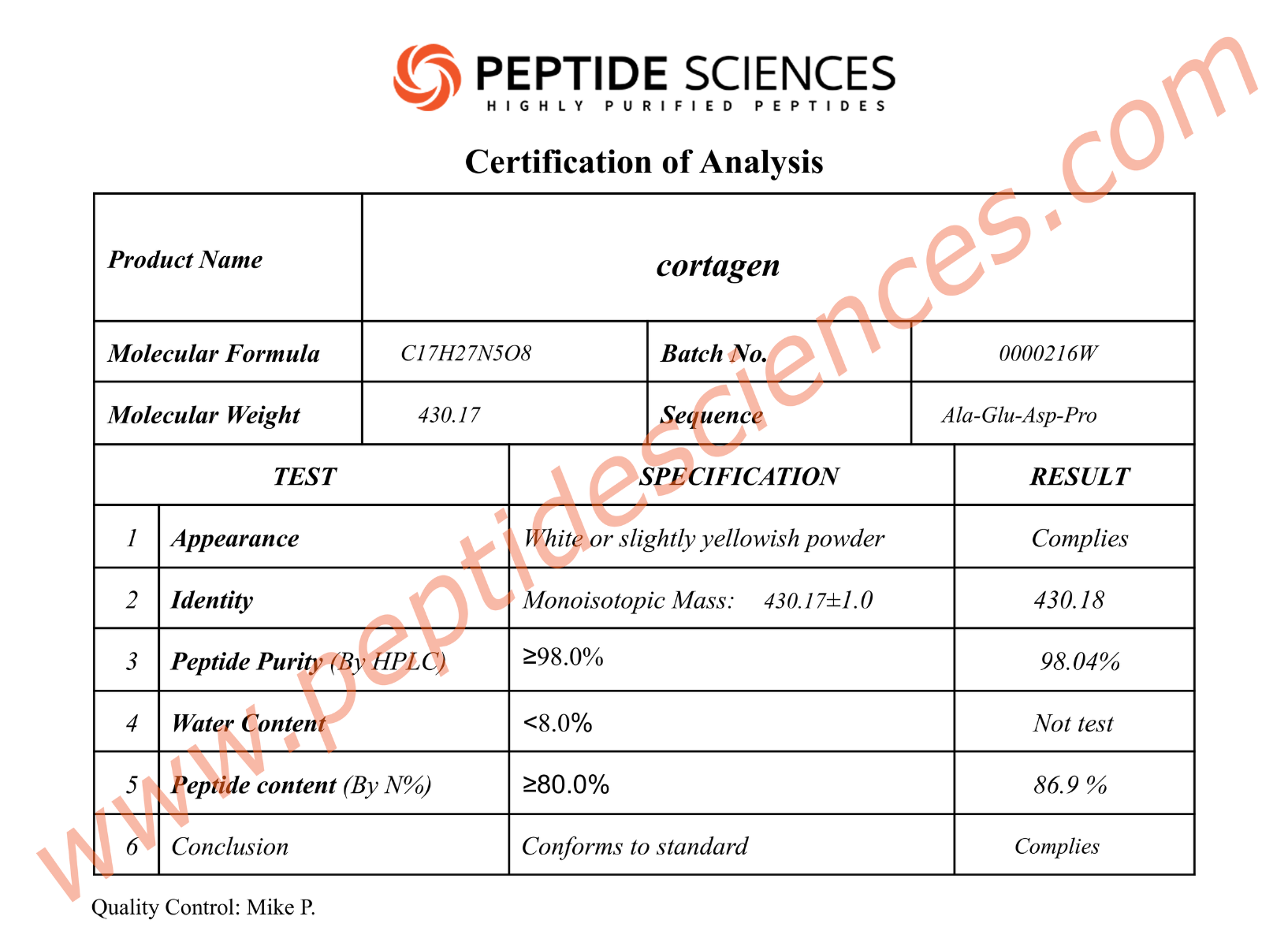
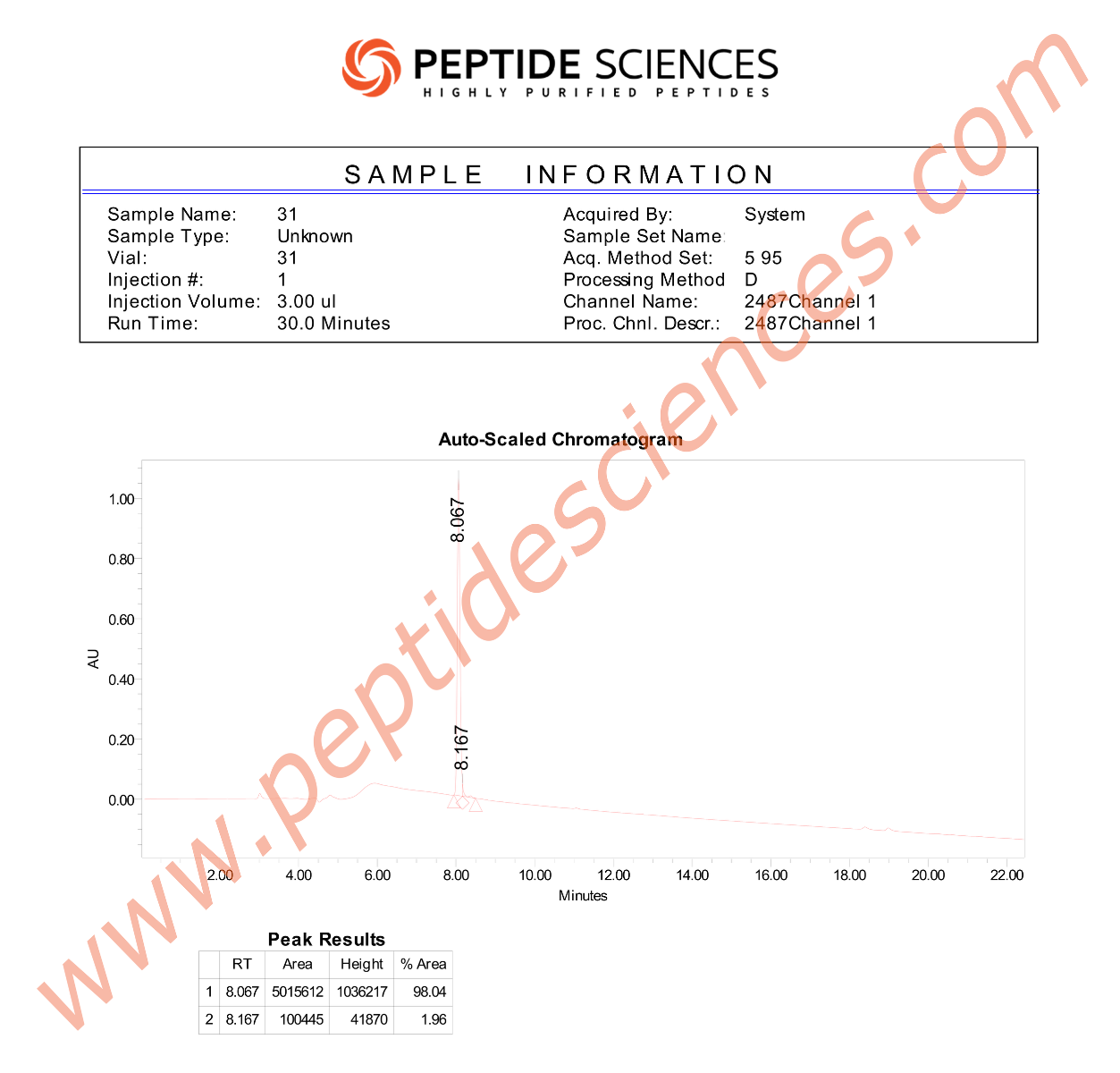
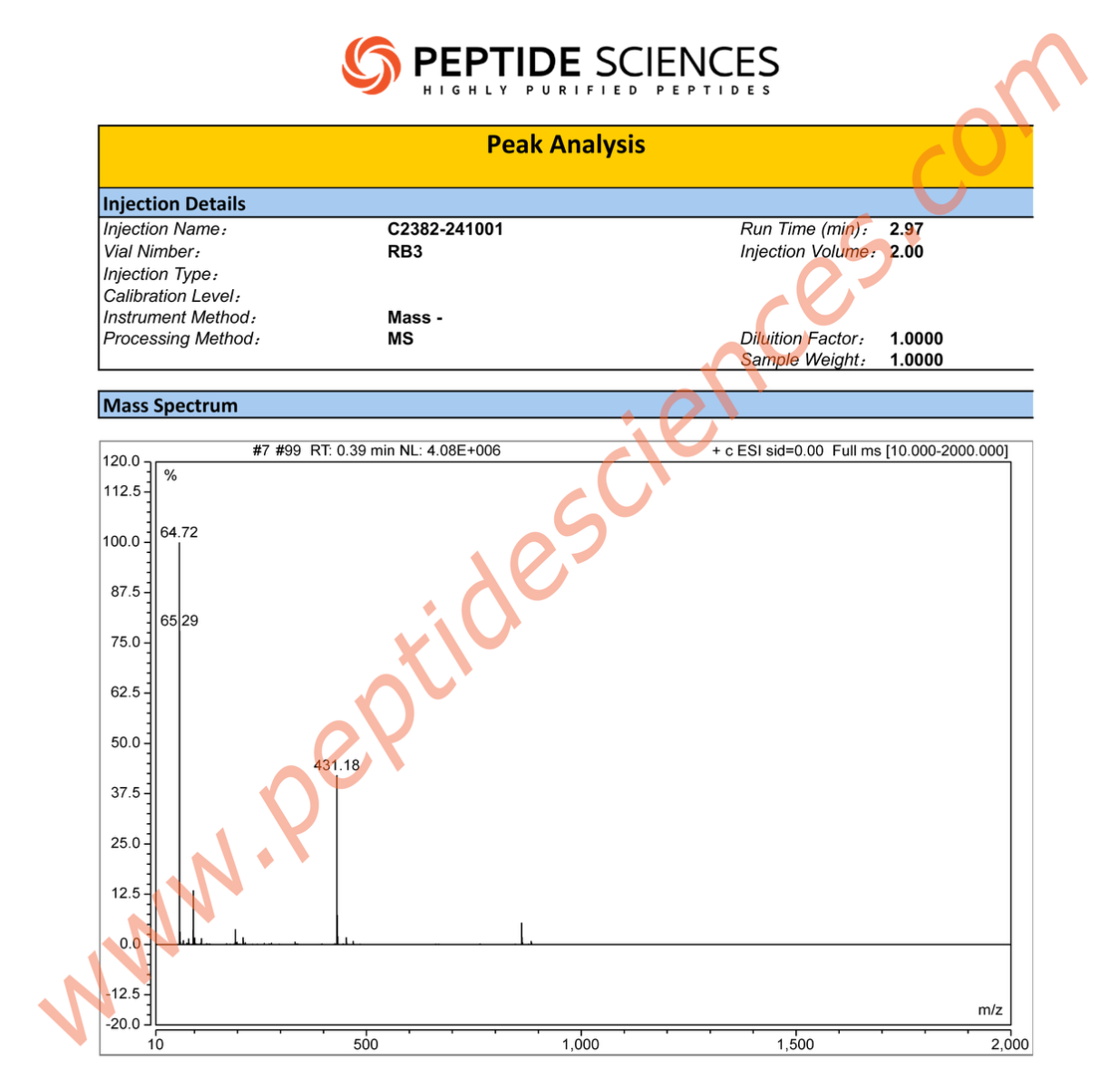
This product is furnished strictly as a laboratory research reagent. Standard analytical characterization for short peptides may include chromatographic purity assessment (e.g., HPLC/UPLC) and molecular mass confirmation by mass spectrometry, with additional physicochemical testing as appropriate. Researchers should consult lot-specific analytical documentation (e.g., COA) for identity and purity data relevant to experimental recordkeeping and method selection.
Article Author
The above literature was researched, edited and organized by Dr. E. Logan, M.D. Dr. E. Logan holds a doctorate degree from Case Western Reserve University School of Medicine and a B.S. in molecular biology.
Scientific Journal Author
 Vladimir Khavinson is a Professor, President of the European region of the International Association of Gerontology and Geriatrics; Member of the Russian and Ukrainian Academies of Medical Sciences; Main gerontologist of the Health Committee of the Government of Saint Petersburg, Russia; Director of the Saint Petersburg Institute of Bioregulation and Gerontology; Vice-president of Gerontological Society of the Russian Academy of Sciences; Head of the Chair of Gerontology and Geriatrics of the North-Western State Medical University, St-Petersburg; Colonel of medical service (USSR, Russia), retired. Vladimir Khavinson is known for the discovery, experimental and clinical studies of new classes of peptide bioregulators as well as for the development of bioregulating peptide therapy. He is engaged in studying of the role of peptides in regulation of the mechanisms of ageing. His main field of actions is design, pre-clinical and clinical studies of new peptide geroprotectors. A 40-year-long investigation resulted in a multitude of methods of application of peptide bioregulators to slow down the process of ageing and increase human life span. Six peptide-based pharmaceuticals and 64 peptide food supplements have been introduced into clinical practice by V. Khavinson. He is an author of 196 patents (Russian and international) as well as of 775 scientific publications. His major achievements are presented in two books: “Peptides and Ageing” (NEL, 2002) and “Gerontological aspects of genome peptide regulation” (Karger AG, 2005). Vladimir Khavinson introduced scientific specialty “Gerontology and Geriatrics” in the Russian Federation on the governmental level. Academic Council headed by V. Khavinson has oversighted over 200 Ph.D. and Doctorate theses from many different countries.
Prof. Vladimir Khavinson is being referenced as one of the leading scientists involved in the research and development of Cortagen. In no way is this doctor/scientist endorsing or advocating the purchase, sale, or use of this product for any reason. There is no affiliation or relationship, implied or otherwise, between Peptide Sciences and this doctor. The purpose of citing the doctor is to acknowledge, recognize, and credit the exhaustive research and development efforts conducted by the scientists studying this peptide.
Referenced Citations
- L. N. Turchaninova, L. I. Kolosova, V. V. Malinin, A. B. Moiseeva, A. D. Nozdrachev, and V. K. Khavinson, “Effect of tetrapeptide cortagen on regeneration of sciatic nerve,” Bull. Exp. Biol. Med., vol. 130, no. 12, pp. 1172–1174, Dec. 2000.
- V. K. Khavinson, “Peptides and Ageing,” Neuro Endocrinol. Lett., vol. 23 Suppl 3, pp. 11–144, 2002.
- S. V. Anisimov, V. K. Khavinson, and V. N. Anisimov, “Elucidation of the effect of brain cortex tetrapeptide Cortagen on gene expression in mouse heart by microarray,” Neuro Endocrinol. Lett., vol. 25, no. 1–2, pp. 87–93, Apr. 2004.
- V. K. Khavinson, T. A. Lezhava, and V. V. Malinin, “Effects of short peptides on lymphocyte chromatin in senile subjects,” Bull. Exp. Biol. Med., vol. 137, no. 1, pp. 78–81, Jan. 2004.
- T. Lezhava, J. Monaselidze, T. Kadotani, N. Dvalishvili, and T. Buadze, “Anti-aging peptide bioregulators induce reactivation of chromatin,” Georgian Med. News, no. 133, pp. 111–115, Apr. 2006.
- L. S. Kozina, “Effects of bioactive tetrapeptides on free-radical processes,” Bull. Exp. Biol. Med., vol. 143, no. 6, pp. 744–746, Jun. 2007.
- A. V. Gumen, I. A. Kozinets, S. N. Shanin, V. V. Malinin, and E. G. Rybakina, “Production of lymphocyte-activating factors by mouse macrophages during aging and under the effect of short peptides,” Bull. Exp. Biol. Med., vol. 142, no. 3, pp. 360–362, Sep. 2006.
- T. B. Kazakova et al., “In vitro effect of short peptides on expression of interleukin-2 gene in splenocytes,” Bull. Exp. Biol. Med., vol. 133, no. 6, pp. 614–616, Jun. 2002.
- I. V. Zarubina and P. D. Shabanov, “[Cortexin and cortagen as correcting agents in functional and metabolic disorders in the brain in chronic ischemia],” Eksp. Klin. Farmakol., vol. 74, no. 2, pp. 8–15, 2011.
- N. V. Gulyaeva, “[Molecular mechanisms of brain peptide-containing drugs: cortexin],” Zh. Nevrol. Psikhiatr. Im. S. S. Korsakova, vol. 118, no. 10, pp. 93–96, 2018.
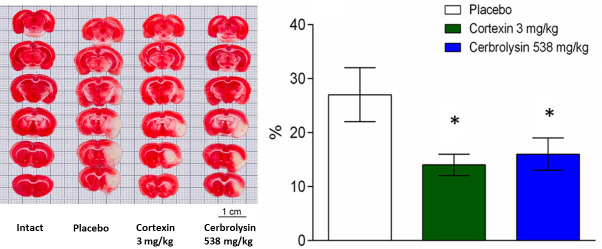
- D. V. Kurkin et al., “Neuroprotective action of Cortexin, Cerebrolysin and Actovegin in acute or chronic brain ischemia in rats,” PloS One, vol. 16, no. 7, p. e0254493, 2021.
ALL ARTICLES AND PRODUCT INFORMATION PROVIDED ON THIS WEBSITE ARE FOR INFORMATIONAL AND EDUCATIONAL PURPOSES ONLY.
RUO Disclaimer
The products offered on this website are furnished for in-vitro studies only. In-vitro studies (Latin: in glass) are performed outside of the body. These products are not medicines or drugs and have not been approved by the FDA to prevent, treat or cure any medical condition, ailment or disease. Bodily introduction of any kind into humans or animals is strictly forbidden by law.
For Laboratory Research Only. Not for human use, medical use, diagnostic use, or veterinary use.
Storage Instructions:
All of our products are manufactured using the Lyophilization (Freeze Drying) process, which ensures that our products remain 100% stable for shipping for up to 3-4 months.
Once the peptides are reconstituted (mixed with bacteriostatic water), they must be stored in the fridge to maintain stability. After reconstitution, the peptides will remain stable for up to 30 days.
Lyophilization is a unique dehydration process, also known as cryodesiccation, where the peptides are frozen and then subjected to low pressure. This causes the water in the peptide vial to sublimate directly from solid to gas, leaving behind a stable, crystalline white structure known as lyophilized peptide. The puffy white powder can be stored at room temperature until you’re ready to reconstitute it with bacteriostatic water.
Once peptides have been received, it is imperative that they are kept cold and away from light. If the peptides will be used immediately, or in the next several days, weeks or months, short-term refrigeration under 4C (39F) is generally acceptable. Lyophilized peptides are usually stable at room temperatures for several weeks or more, so if they will be utilized within weeks or months such storage is typically adequate.
However, for longer term storage (several months to years) it is more preferable to store peptides in a freezer at -80C (-112F). When storing peptides for months or even years, freezing is optimal in order to preserve the peptide’s stability.
Why Choose Our Cortagen 20mg (Bioregulator)?
When you are looking for Cortagen 20mg (Bioregulator) for sale, quality is paramount.
Our products undergo rigorous testing to ensure they meet the strict requirements of laboratory environments.
By choosing to buy Cortagen 20mg (Bioregulator) from our store, you are guaranteed a product that is:
- High Purity (Tested for 99%+)
- Fast Shipping – Always in stock
- Secure Packaging for Research Integrity
- Competitive Pricing for Bulk Orders
Specifications & Technical Data
| Feature | Specification |
|---|---|
| Product Name | Cortagen 20mg (Bioregulator) |
| SKU | 29 |
| Purity | >99% |
| Form | Research Grade Compound |
| Availability | In Stock / For Sale |
Scientific Research & Clinical Applications
The research surrounding Cortagen 20mg (Bioregulator) is vast. Scientists explore its potential in various metabolic and physiological models.
For more detailed scientific data, you can visit PubMed
to review the latest peer-reviewed literature regarding this compound.
Frequently Asked Questions
Where can I buy Cortagen 20mg (Bioregulator)?
You can buy Cortagen 20mg (Bioregulator) directly from our website. We provide a secure checkout and fast shipping to ensure your research stays on track.
Is Cortagen 20mg (Bioregulator) in stock?
Yes, we currently have Cortagen 20mg (Bioregulator) in stock. Orders are typically processed within 24 hours to ensure rapid delivery to your laboratory.
Related Research Products
If you are interested in Cortagen 20mg (Bioregulator), you may also want to explore these related products currently in stock:
Disclaimer: All products listed are for research purposes only. Not for human consumption.
Related products

All Peptides

All Peptides

All Peptides
All Peptides

All Peptides

All Peptides
All Peptides

All Peptides