

hGH Fragment 176-191 6mg


$65.00
hGH Fragment 176–191 is a synthetic research peptide corresponding to amino acids 177–191 of the human growth hormone sequence. It modulates lipid and glucose metabolism in vitro via β-adrenergic and AMPK-mediated pathways, independent of IGF-1 receptor activation. This fragment is used in experimental models investigating energy regulation, adipocyte signaling, and metabolic peptide function.
For research use only. Not for human consumption.
References:
Heffernan MA et al., Eur J Endocrinol, 2001 144:511–517
Ng FM et al., Drug Dev Res, 2000 51:63–71
Ng FM et al., Metabolism, 2002 51(12):1739–1743
hGH Fragment 176-191 6mg – Buy High-Quality hGH Fragment 176-191 6mg Online
Looking to buy hGH Fragment 176-191 6mg for your research laboratory? You have come to the right place.
We currently have hGH Fragment 176-191 6mg for sale and it is in stock and ready for immediate shipping.
Our hGH Fragment 176-191 6mg is of the highest purity, making it the best hGH Fragment 176-191 6mg online for scientific studies.
Product Overview
hGH Fragment 176-191 6mg is a premium research compound widely utilized in various scientific studies.
Researchers seeking to buy hGH Fragment 176-191 6mg online often prioritize purity and consistency.
This compound has been studied extensively for its unique biochemical properties and its role in cellular pathways.
Overview
Fragment 176-191 is a small C-terminal segment of human growth hormone (hGH) that has been used as a laboratory research reagent in studies focused on fat metabolism (lipolysis) and energy-balance pathways. In research discussions, Fragment 176-191 is often described within the same investigative lineage as related hGH-derived lipolytic domains (including AOD9604), and it is used to explore adipose-tissue signaling under controlled experimental conditions.
Fragment 176-191 has drawn interest in mechanistic research because preclinical work has evaluated whether a lipolytic hGH fragment can preserve aspects of fat-related signaling while minimizing other endocrine outputs commonly associated with full-length hGH (e.g., broader anabolic or growth-associated effects) within specific study designs.
Biochemical Characteristics
Sequence: Phe–Leu–Arg–Ile–Val–Gln–Cys–Arg–Ser–Val–Glu–Gly–Ser–Cys–Gly–Phe
Molecular Formula: C78H123N23O22S2
Molecular Weight: 1799.1 g/mol
CAS Number: 66004-57-7
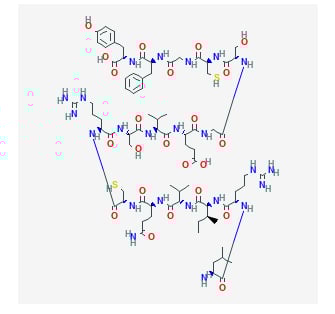
Source: PubChem
In laboratory settings, Fragment 176-191 is typically treated as a defined-sequence peptide input for metabolic pathway interrogation, adipocyte signaling assays, and preclinical energy-balance model designs.
Research Applications
Fragment 176-191 may be used as a research reagent in controlled studies investigating:
- Adipose biology & lipolysis: pathway mapping of lipid mobilization, adipose mass changes, and fat oxidation endpoints in preclinical models.
- Energy homeostasis: mechanistic studies of weight trajectories, energy expenditure proxies, and substrate utilization signatures.
- Receptor/pathway attribution designs: evaluating candidate upstream drivers (e.g., adrenergic signaling involvement) using knockout models, pharmacologic controls, or comparator peptides.
- Comparative hGH-fragment research: contrasting full-length hGH versus fragment-based inputs to distinguish lipolytic-focused effects from broader endocrine outputs in defined experimental systems.
- Exploratory connective tissue models: related hGH-fragment lineages have been explored in cartilage and joint-tissue paradigms to interrogate tissue-response mechanisms in preclinical settings.
These examples describe research uses only and are not intended as medical, diagnostic, or therapeutic claims.
Pathway / Mechanistic Context
Fragment 176-191 is commonly discussed in metabolic research as a lipolytic hGH-derived fragment used to probe fat-mobilization pathways. In obesity-model literature, a proposed mechanistic linkage has included beta-3 adrenergic receptor (β3-AR / ADRB3)–associated signaling in adipose tissue, a pathway frequently studied for roles in lipolysis and thermogenesis in certain preclinical systems.[2]
Because metabolic phenotypes can be influenced by multiple overlapping control loops (adrenergic tone, endocrine signaling, diet, genetics, and tissue-specific receptor expression), studies often incorporate comparator groups (e.g., placebo/saline, full-length hGH, related fragments or domains) and, in some cases, knockout models to support attribution of observed lipid-handling endpoints.
Preclinical Research Summary
1) Glucose-Related Signaling Exploration (Preclinical)
Earlier animal work evaluating multiple synthetic C-terminal fragments of hGH explored glucose-related effects, and Fragment 176-191 was described as comparatively active in those experimental conditions, with reported changes occurring alongside sustained increases in plasma insulin levels in the study’s model system.[1] This line of research contributed to broader interest in how specific hGH-derived regions may interact with metabolic signaling readouts.
2) Lipid Mobilization, Weight Trajectories, and β3-AR Discussion (Preclinical)
Obesity-model studies have reported reduced weight gain and adipose-tissue changes following chronic treatment paradigms involving the hGH lipolytic fragment lineage, with mechanistic discussions that include β3-AR pathway involvement in certain experimental contexts.[2] Additional preclinical literature has discussed β3-AR agonism and its relationship to lipid stores and fat oxidation in rodent models.[3]
Related metabolic studies of AOD9604 (a synthetic lipolytic domain in the same research lineage) reported outcomes consistent with changes in energy expenditure and weight-related endpoints under their study designs, including discussion of measured parameters such as glucose tolerance, insulin sensitivity, and IGF-1 within that framework.[4]
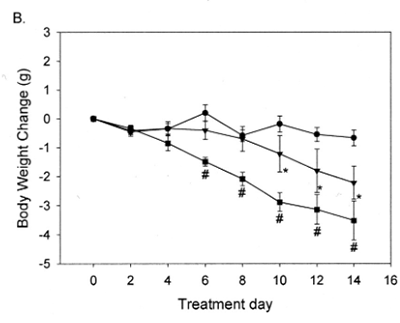
Body weight in genetically obese mice after two weeks of treatment with a single daily dose of Fragment 176-191
Source: Oxford Academic
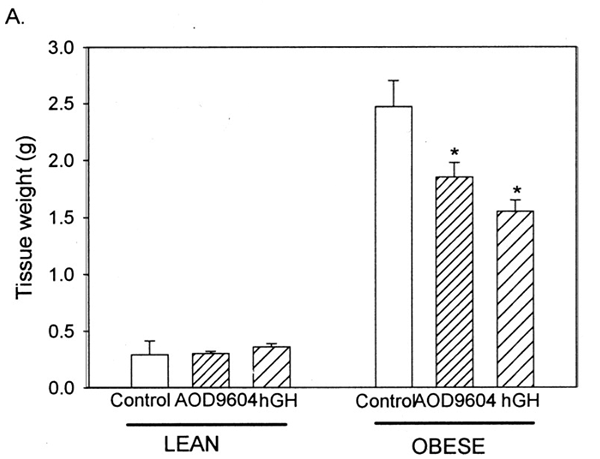
Effect of saline (control), Fragment 176-191, and hGH on white adipose tissue mass in obese mice over 14 days
Source: Oxford Academic
3) Safety/Tolerability Framing and Study Design Considerations
Because long-term exogenous hGH exposure is discussed clinically in association with potential adverse outcomes (e.g., insulin resistance and related metabolic issues), research has evaluated whether lipolytic fragments or domains can be studied with a more targeted profile in defined settings. A publication assessing safety and tolerability of the hexadecapeptide AOD9604 in humans is included among the cited sources.[5] Additional cited metabolic studies reported no meaningful differences versus placebo in several measured parameters under their study designs, including glucose tolerance, insulin sensitivity, and IGF-1 levels.[4]
Preclinical work has also discussed selection of lipolytic fragments for studying fat oxidation and weight outcomes rather than anabolic signaling, including discussion of endpoints related to proliferation in specific experimental contexts.[6]
4) Exploratory Connective Tissue / Cartilage Models (Preclinical)
Beyond metabolism, related hGH-fragment research has been explored in connective tissue models. A rabbit osteoarthritis study investigated intra-articular AOD9604 (with or without hyaluronic acid) and reported findings consistent with changes in cartilage-related measures in that experimental context.[7]
Note: The studies summarized above describe mechanistic or experimental endpoints in laboratory and preclinical systems and are not intended as medical claims.
Form & Analytical Testing
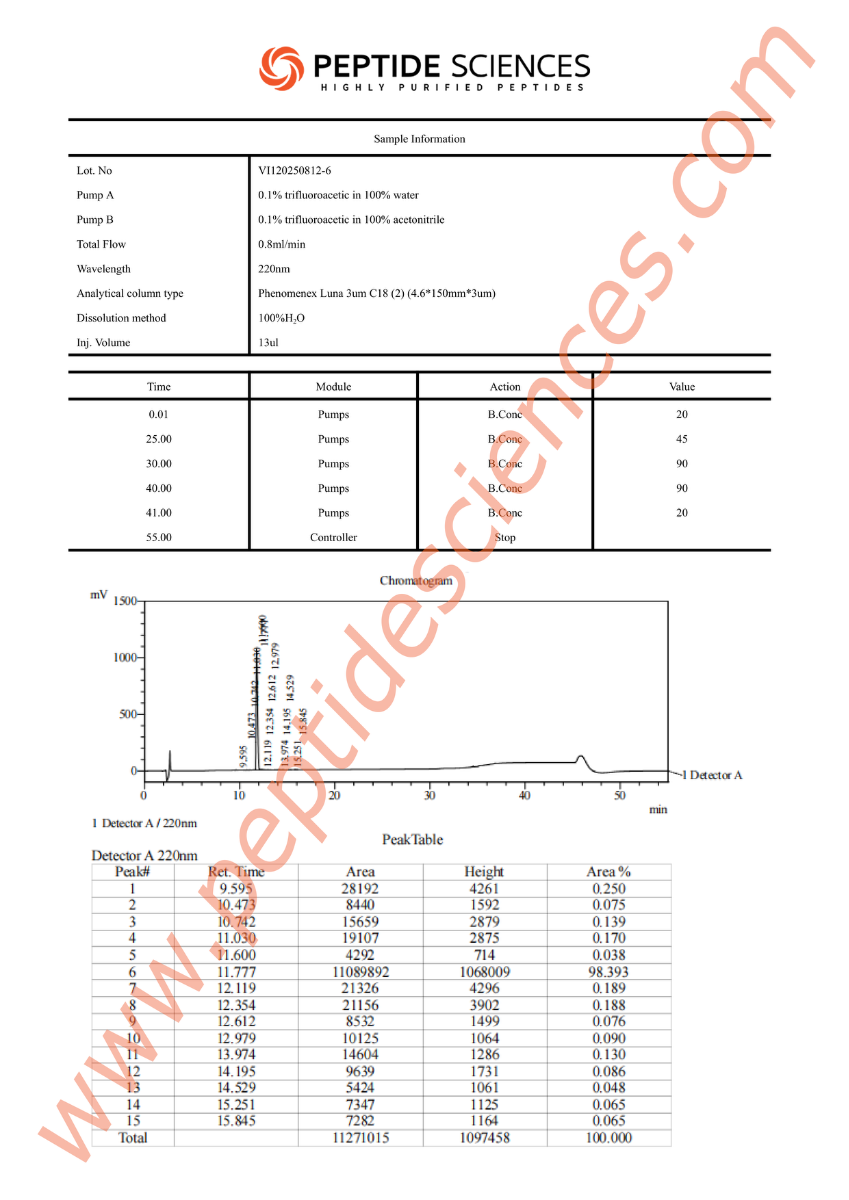
In laboratory supply and research environments, peptide identity and quality are commonly evaluated using standard analytical approaches such as chromatographic purity profiling and mass-based identity confirmation. These methods support controlled experimental use and batch-to-batch documentation within the purchaser’s research quality framework.
This section is provided for general informational context regarding common laboratory quality practices and does not represent a medical, diagnostic, or clinical application.
Article Author
The above literature was researched, edited and organized by Dr. Logan, M.D. Dr. Logan holds a doctorate degree from Case Western Reserve University School of Medicine and a B.S. in molecular biology.
Scientific Journal Author
Frank Ng, M.D. has been cited for contributions to research exploring growth-hormone–derived lipolytic domains and fragments (including AOD9604 and Fragment 176-191 lineage), with published work spanning lipid metabolism in obesity models and related metabolic endpoints under experimental control.
This reference is provided to acknowledge scientific contributions and does not imply endorsement or advocacy of purchase, sale, or use of this product. No affiliation or relationship is implied between the seller and this scientist. The cited work appears in the references below.
Referenced Citations
- F. M. Ng and J. Bornstein, “Hyperglycemic action of synthetic C-terminal fragments of human growth hormone,” Am. J. Physiol., vol. 234, no. 5, pp. E521–526, May 1978.
- M. Heffernan et al., “The Effects of Human GH and Its Lipolytic Fragment (AOD9604) on Lipid Metabolism Following Chronic Treatment in Obese Mice and β3-AR Knock-Out Mice,” Endocrinology, vol. 142, no. 12, pp. 5182–5189, Dec. 2001.
- R. Ferrer-Lorente, C. Cabot, J.-A. Fernández-López, and M. Alemany, “Combined effects of oleoyl-estrone and a beta3-adrenergic agonist (CL316,243) on lipid stores of diet-induced overweight male Wistar rats,” Life Sci., vol. 77, no. 16, pp. 2051–2058, Sep. 2005.
- F. M. Ng, J. Sun, L. Sharma, R. Libinaka, W. J. Jiang, and R. Gianello, “Metabolic studies of a synthetic lipolytic domain (AOD9604) of human growth hormone,” Horm. Res., vol. 53, no. 6, pp. 274–278, 2000.
- H. Stier, E. Vos, and D. Kenley, “Safety and Tolerability of the Hexadecapeptide AOD9604 in Humans,” J. Endocrinol. Metab., vol. 3, no. 1–2, pp. 7–15, Apr. 2013.
- M. A. Heffernan et al., “Increase of fat oxidation and weight loss in obese mice caused by chronic treatment with human growth hormone or a modified C-terminal fragment,” Int. J. Obes., vol. 25, no. 10, pp. 1442–1449, Oct. 2001.
- D. R. Kwon and G. Y. Park, “Effect of Intra-articular Injection of AOD9604 with or without Hyaluronic Acid in Rabbit Osteoarthritis Model,” Ann. Clin. Lab. Sci., vol. 45, no. 4, pp. 426–432, Jul. 2015.
ALL ARTICLES AND PRODUCT INFORMATION PROVIDED ON THIS WEBSITE ARE FOR INFORMATIONAL AND EDUCATIONAL PURPOSES ONLY.
RUO Disclaimer
The products offered on this website are furnished for in-vitro studies only. In-vitro studies (Latin: in glass) are performed outside of the body. These products are not medicines or drugs and have not been approved by the FDA to prevent, treat or cure any medical condition, ailment or disease. Bodily introduction of any kind into humans or animals is strictly forbidden by law.
For Laboratory Research Only. Not for human use, medical use, diagnostic use, or veterinary use.


Storage Instructions:
All of our products are manufactured using the Lyophilization (Freeze Drying) process, which ensures that our products remain 100% stable for shipping for up to 3-4 months.
Once the peptides are reconstituted (mixed with bacteriostatic water), they must be stored in the fridge to maintain stability. After reconstitution, the peptides will remain stable for up to 30 days.
Lyophilization is a unique dehydration process, also known as cryodesiccation, where the peptides are frozen and then subjected to low pressure. This causes the water in the peptide vial to sublimate directly from solid to gas, leaving behind a stable, crystalline white structure known as lyophilized peptide. The puffy white powder can be stored at room temperature until you’re ready to reconstitute it with bacteriostatic water.
Once peptides have been received, it is imperative that they are kept cold and away from light. If the peptides will be used immediately, or in the next several days, weeks or months, short-term refrigeration under 4C (39F) is generally acceptable. Lyophilized peptides are usually stable at room temperatures for several weeks or more, so if they will be utilized within weeks or months such storage is typically adequate.
However, for longer term storage (several months to years) it is more preferable to store peptides in a freezer at -80C (-112F). When storing peptides for months or even years, freezing is optimal in order to preserve the peptide’s stability.
Why Choose Our hGH Fragment 176-191 6mg?
When you are looking for hGH Fragment 176-191 6mg for sale, quality is paramount.
Our products undergo rigorous testing to ensure they meet the strict requirements of laboratory environments.
By choosing to buy hGH Fragment 176-191 6mg from our store, you are guaranteed a product that is:
- High Purity (Tested for 99%+)
- Fast Shipping – Always in stock
- Secure Packaging for Research Integrity
- Competitive Pricing for Bulk Orders
Specifications & Technical Data
| Feature | Specification |
|---|---|
| Product Name | hGH Fragment 176-191 6mg |
| SKU | 64 |
| Purity | >99% |
| Form | Research Grade Compound |
| Availability | In Stock / For Sale |
Scientific Research & Clinical Applications
The research surrounding hGH Fragment 176-191 6mg is vast. Scientists explore its potential in various metabolic and physiological models.
For more detailed scientific data, you can visit PubMed
to review the latest peer-reviewed literature regarding this compound.
Frequently Asked Questions
Where can I buy hGH Fragment 176-191 6mg?
You can buy hGH Fragment 176-191 6mg directly from our website. We provide a secure checkout and fast shipping to ensure your research stays on track.
Is hGH Fragment 176-191 6mg in stock?
Yes, we currently have hGH Fragment 176-191 6mg in stock. Orders are typically processed within 24 hours to ensure rapid delivery to your laboratory.
Related Research Products
If you are interested in hGH Fragment 176-191 6mg, you may also want to explore these related products currently in stock:
Disclaimer: All products listed are for research purposes only. Not for human consumption.
Related products

All Peptides

All Peptides

All Peptides

All Peptides

All Peptides

All Peptides

All Peptides

All Peptides