

FGL-S 10mg
$140.00
FGL-S is a synthetic research peptide derived from the neural cell adhesion molecule (NCAM) sequence containing the fibroblast growth factor–like (FGL) domain. It has been shown in preclinical studies to promote neurite outgrowth, synaptogenesis, and neuroplasticity through activation of FGFR, ERK, and PI3K/Akt signaling pathways. FGL-S is used in experimental neurobiology to investigate mechanisms of neuronal regeneration, peptide-induced signaling, and synaptic remodeling.
For research use only. Not for human consumption.
References:
Cambon K et al., J Neurosci Res, 2004 77(5):730–739
Bisaz R et al., Eur J Neurosci, 2006 23(8):2045–2054
Chen ZY et al., Mol Cell Neurosci, 2010 43(3):329–339
FGL-S 10mg – Buy High-Quality FGL-S 10mg Online
Looking to buy FGL-S 10mg for your research laboratory? You have come to the right place.
We currently have FGL-S 10mg for sale and it is in stock and ready for immediate shipping.
Our FGL-S 10mg is of the highest purity, making it the best FGL-S 10mg online for scientific studies.
Product Overview
FGL-S 10mg is a premium research compound widely utilized in various scientific studies.
Researchers seeking to buy FGL-S 10mg online often prioritize purity and consistency.
This compound has been studied extensively for its unique biochemical properties and its role in cellular pathways.
Overview
FGL-S is a synthetic peptide composed of 15 amino acids and described in the scientific literature as a sequence derived from the second fibronectin type III module of the neural cell adhesion molecule (NCAM). NCAM-derived peptides have been examined in experimental research as molecular mimetics that reproduce specific structural motifs of the parent adhesion molecule under controlled laboratory conditions.
Publications referencing FGL-S and related FGL peptides describe their use in non-clinical research contexts involving cellular assays and animal model systems. All reported observations are confined to descriptive and mechanistic investigations and are limited to laboratory-based experimental settings.
No statements regarding human applicability, clinical relevance, or biological outcomes beyond research observation are made.
Biochemical Characteristics
Source: PubChem
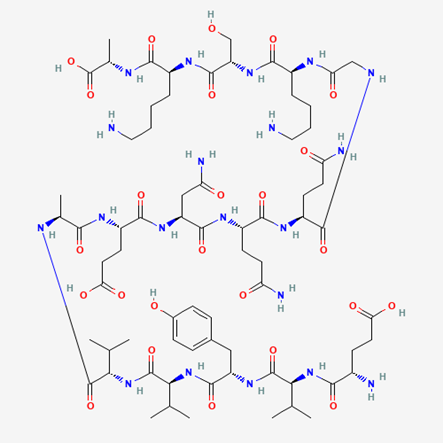
Amino Acid Sequence: H-Glu-Val-Tyr-Val-Val-Ala-Glu-Asn-Gln-Gln-Gly-Lys-Ser-Lys-Ala-OH
Molecular Formula: C71H116N20O25
Molecular Weight: 1649.8 g/mol
PubChem CID: 16200289
CAS Number: 499993-62-3
Reported Synonyms: HY-P3281, DA-53184, CS-0655069
FGL-S has been described as a linear peptide whose primary structure reproduces a specific NCAM-associated motif. Structural descriptions are limited to compositional and physicochemical attributes reported in biochemical research sources.
Research Applications
In the scientific literature, FGL-S and related FGL peptides have been referenced in non-clinical research involving cellular cultures, ex-vivo preparations, and animal model studies. These publications describe experimental contexts in which molecular interactions, signaling components, and structural features were observed and recorded.
Reported research contexts include examination of:
- NCAM-associated molecular interactions
- Fibroblast growth factor receptor (FGFR) signaling components
- Neurite morphology and synaptic ultrastructure in experimental models
- Glial cell–associated molecular markers
- Transcriptional responses following experimental perturbation
All reported applications remain confined to descriptive investigation within controlled laboratory research environments.
Pathway / Mechanistic Context
Mechanistic discussions in preclinical publications describe FGL peptides in relation to neural cell adhesion molecule (NCAM)–associated signaling and fibroblast growth factor receptor (FGFR)–linked intracellular pathways. These pathways have been examined in experimental systems for their involvement in cytoskeletal organization, vesicular dynamics, and transcriptional regulation.
Additional references describe observations involving kinase-associated signaling modules, including MAPK- and PI3K-related cascades, recorded under defined laboratory conditions. All pathway-related descriptions are limited to molecular and biochemical observations within experimental research settings.
Preclinical Research Summary
Preclinical studies cited in the scientific literature describe observations involving FGL peptides in cellular and non-clinical animal models. Reported observations include measurements of neurite-associated structures, synaptic ultrastructural features, gene expression markers, and signaling-associated proteins documented under defined experimental conditions.
Additional publications describe transcriptional and cellular responses observed following experimental injury or perturbation models. All reported findings remain restricted to the experimental systems employed and do not extend beyond laboratory research contexts.
Form & Analytical Testing
FGL-S is supplied as a research-grade synthetic peptide material. Identity and composition have been reported as characterized using analytical techniques commonly applied to peptide research materials, including chromatographic and mass spectrometric methods.
Handling, storage, and analytical verification parameters are determined by individual laboratories in accordance with internal research protocols.
About The Author
The above literature was researched, edited, and organized by Dr. Logan, M.D. Dr. Logan holds a doctorate degree from Case Western Reserve University School of Medicine and a B.S. in molecular biology.
Scientific Journal Author
Victor I. Popov, Ph.D. is a senior researcher at the Institute of Cell Biophysics, Russian Academy of Sciences, Pushchino, Russia. His published work focuses on synaptic transmission, presynaptic mechanisms, calcium signaling, and neuronal ultrastructure in experimental research systems.
Dr. Popov is cited solely for attribution of scientific authorship in the referenced literature. No endorsement, affiliation, or advocacy of any product is implied or stated. The purpose of citation is to acknowledge research contributions only.
Referenced Citations
- V. I. Popov et al., “A cell adhesion molecule mimetic, FGL peptide, induces alterations in synapse and dendritic spine structure in the dentate gyrus of aged rats,” Eur J Neurosci, vol. 27, no. 2, pp. 301–314, Jan. 2008. doi: 10.1111/j.1460-9568.2007.06004.x.
- A. Aonurm-Helm et al., “NCAM-mimetic, FGL peptide, restores disrupted FGFR signaling in NCAM-deficient mice,” Brain Res, vol. 1309, pp. 1–8, Jan. 2010.
- T. Secher et al., “NCAM-derived FGL peptide and postnatal sensorimotor development,” Neuroscience, vol. 141, no. 3, pp. 1289–1299, 2006.
- R. Anand et al., “Tolerability and pharmacokinetics of the FGLL peptide,” Clin Pharmacokinet, vol. 46, no. 4, pp. 351–358, 2007.
- X. Wen et al., “Extracellular vesicles and synaptic toxicity models,” Int J Nanomedicine, vol. 20, pp. 4627–4644, 2025.
- M. V. Pedersen et al., “NCAM-derived peptide modulation following traumatic brain injury,” Neurosci Lett, vol. 437, no. 2, pp. 148–153, 2008.
ALL ARTICLES AND PRODUCT INFORMATION PROVIDED ON THIS WEBSITE ARE FOR INFORMATIONAL AND EDUCATIONAL PURPOSES ONLY.
Products are furnished for in-vitro laboratory research only. These materials are not drugs, medical devices, or therapeutics and have not been approved by the FDA. Bodily introduction into humans or animals is strictly prohibited.
RUO Disclaimer
The products offered on this website are furnished for in-vitro studies only. In-vitro studies (Latin: in glass) are performed outside of the body. These products are not medicines or drugs and have not been approved by the FDA to prevent, treat, or cure any disease or condition. Bodily introduction of any kind into humans or animals is strictly forbidden by law.
For Laboratory Research Only. Not for human use, medical use, diagnostic use, or veterinary use.
Storage Instructions:
All of our products are manufactured using the Lyophilization (Freeze Drying) process, which ensures that our products remain 100% stable for shipping for up to 3-4 months.
Once the peptides are reconstituted (mixed with bacteriostatic water), they must be stored in the fridge to maintain stability. After reconstitution, the peptides will remain stable for up to 30 days.
Lyophilization is a unique dehydration process, also known as cryodesiccation, where the peptides are frozen and then subjected to low pressure. This causes the water in the peptide vial to sublimate directly from solid to gas, leaving behind a stable, crystalline white structure known as lyophilized peptide. The puffy white powder can be stored at room temperature until you’re ready to reconstitute it with bacteriostatic water.
Once peptides have been received, it is imperative that they are kept cold and away from light. If the peptides will be used immediately, or in the next several days, weeks or months, short-term refrigeration under 4C (39F) is generally acceptable. Lyophilized peptides are usually stable at room temperatures for several weeks or more, so if they will be utilized within weeks or months such storage is typically adequate.
However, for longer term storage (several months to years) it is more preferable to store peptides in a freezer at -80C (-112F). When storing peptides for months or even years, freezing is optimal in order to preserve the peptide’s stability.
Why Choose Our FGL-S 10mg?
When you are looking for FGL-S 10mg for sale, quality is paramount.
Our products undergo rigorous testing to ensure they meet the strict requirements of laboratory environments.
By choosing to buy FGL-S 10mg from our store, you are guaranteed a product that is:
- High Purity (Tested for 99%+)
- Fast Shipping – Always in stock
- Secure Packaging for Research Integrity
- Competitive Pricing for Bulk Orders
Specifications & Technical Data
| Feature | Specification |
|---|---|
| Product Name | FGL-S 10mg |
| SKU | 36 |
| Purity | >99% |
| Form | Research Grade Compound |
| Availability | In Stock / For Sale |
Scientific Research & Clinical Applications
The research surrounding FGL-S 10mg is vast. Scientists explore its potential in various metabolic and physiological models.
For more detailed scientific data, you can visit PubMed
to review the latest peer-reviewed literature regarding this compound.
Frequently Asked Questions
Where can I buy FGL-S 10mg?
You can buy FGL-S 10mg directly from our website. We provide a secure checkout and fast shipping to ensure your research stays on track.
Is FGL-S 10mg in stock?
Yes, we currently have FGL-S 10mg in stock. Orders are typically processed within 24 hours to ensure rapid delivery to your laboratory.
Related Research Products
If you are interested in FGL-S 10mg, you may also want to explore these related products currently in stock:
Disclaimer: All products listed are for research purposes only. Not for human consumption.
Related products
All Peptides

All Peptides
All Peptides

All Peptides

All Peptides
All Peptides

All Peptides

All Peptides